
Search results for "budget":
Products
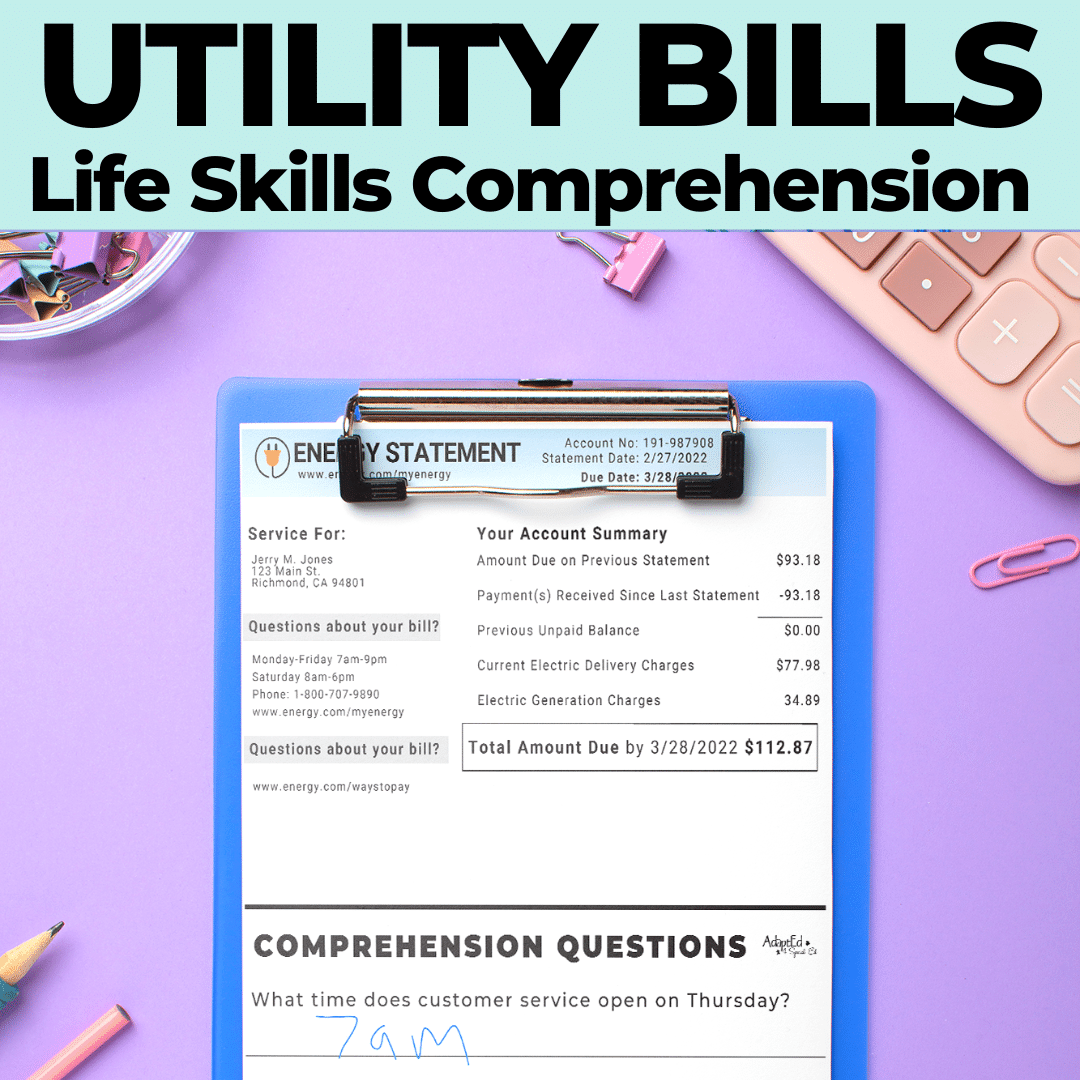
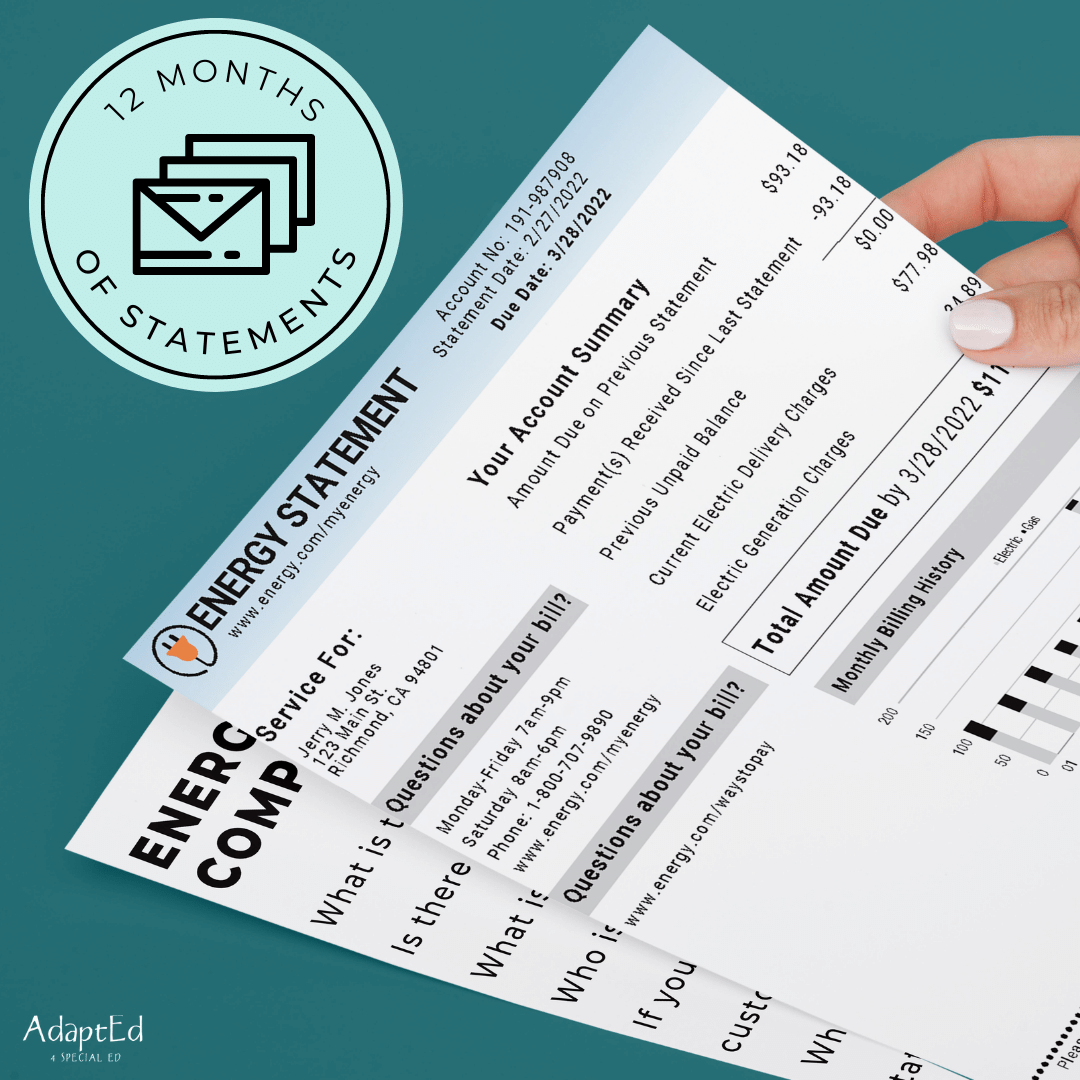
Utility Bills Reading Comprehension (Printable PDF)
Reading and understand utility bills is a skill your students will need to have an independent life.
This resource was designed to introduce and help students practice the important life skill of reading utility bills.
With this download, students will be exposed to a variety of common utility bills and be asked to answer a variety of questions relating to accounts, costs, dates, previous balances, etc.
This resource comes with 24 Level 1 Cut & Paste Worksheets (3 questions per page) and 12 Level 2 Write-in Worksheets (11 questions per page).
The worksheets cover electricity and gas bills and can be printed in both black and white and color.
These worksheets are a fun, engaging, and visual way to practice reading different variations of commonly seen utility bills or invoices.
Why Teach Students How to Read Utility Bills?
Reading utility bills is an important life skill because almost every household receives at least one type of utility bill each month. Understanding how to read a utility bill can help students budget their money, avoid late payment fees, and understand their consumption patterns.
Teaching your students how to read utility bills is an important step in preparing them for success in adulthood.
How to Use This Resource in Your Classroom
This resource was designed to be used in a special education or autism classroom, but can also be used with English language learners or any other student who could benefit from extra practice reading environmental print.
To use this resource, simply print out the desired number of worksheets and have students complete them individually or in small groups.
These worksheets are a great way to introduce environmental print reading comprehension to your students or as a review for students who have already been introduced to this skill.
These worksheets can also be used as part of a larger lesson on budgeting or household expenses.
Teaching your students how to read environmental print is an important step in preparing them for success in adulthood.
This resource was designed to help you introduce this skill in a fun and engaging way.
If you have any questions about how to use this resource in your classroom, please don't hesitate to contact us at krystie@adapted4specialed.com. We're always happy to help!
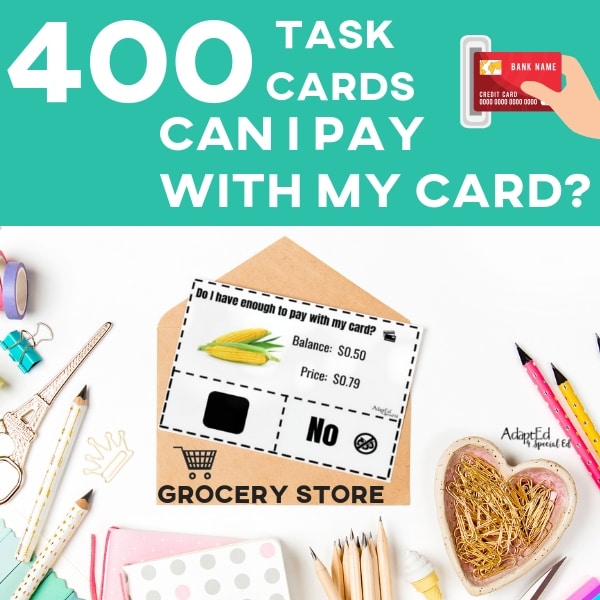
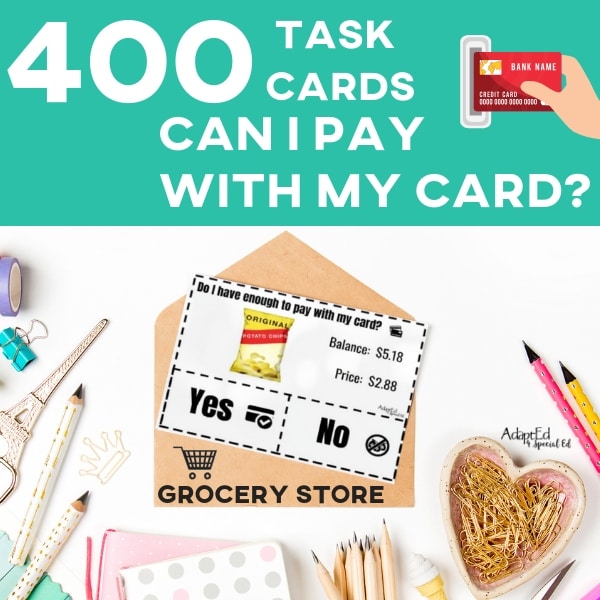
Task Cards: Do I have enough to pay with my card? Grocery Store (Printable PDF)
These task cards have your students determining if they have enough money to use their card to complete the purchase.
These are perfect for older students who are making purchases out in the community, or those kiddos who find money to be motivating to do math!
Comes with 400 task cards in 4 differentiated levels
✓ 4 Levels of Differentiation! We've got all of your student's levels covered. Errorless, Yes/ No, Write It In, Do the Math: Find the New Balance. ✓ Low Prep✓ Data Sheets (that are also EDITABLE) ✓ Functional Life Skill
PDF | 29 MB | 112 pages
All pictures are real photographs in order to encourage generalization and independence.
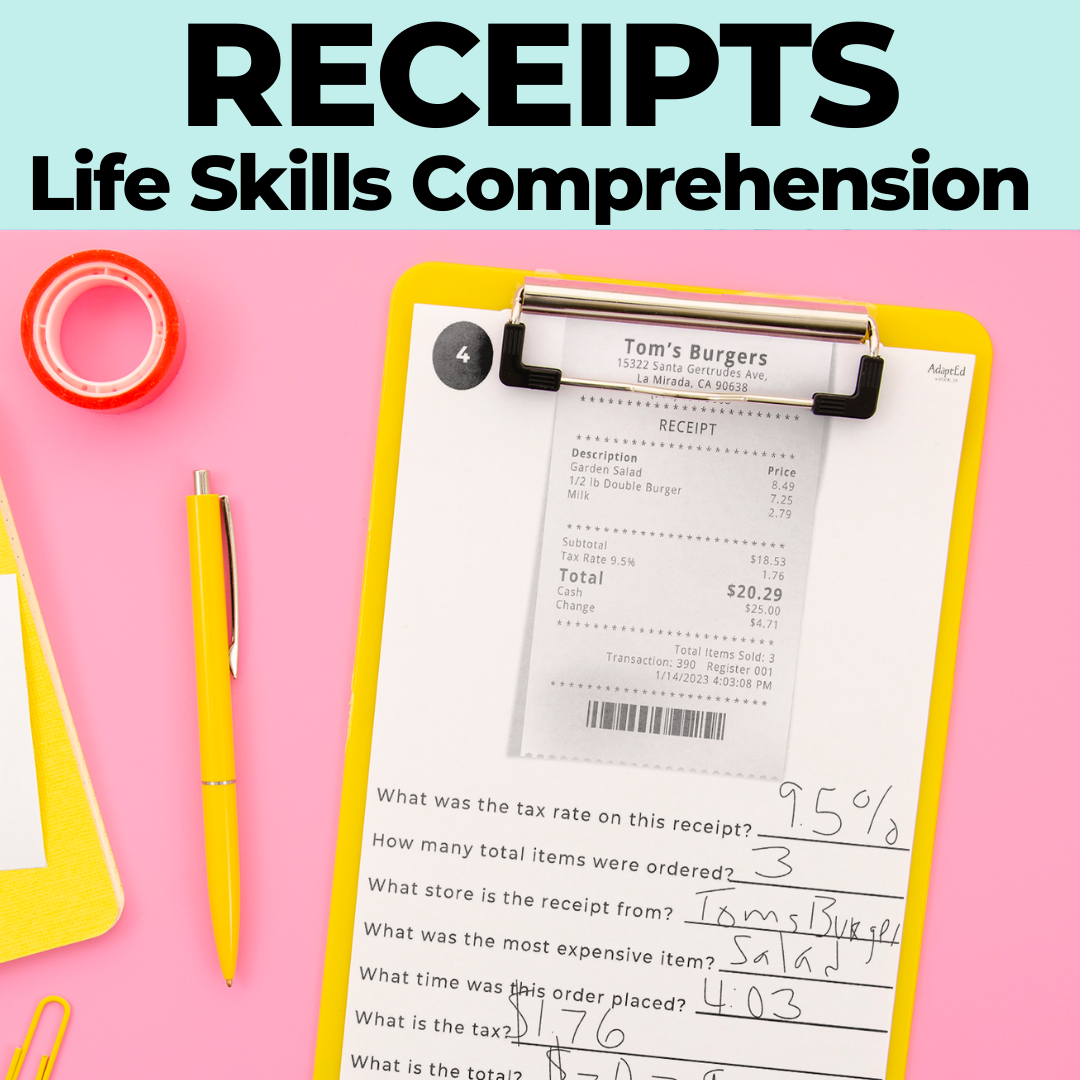
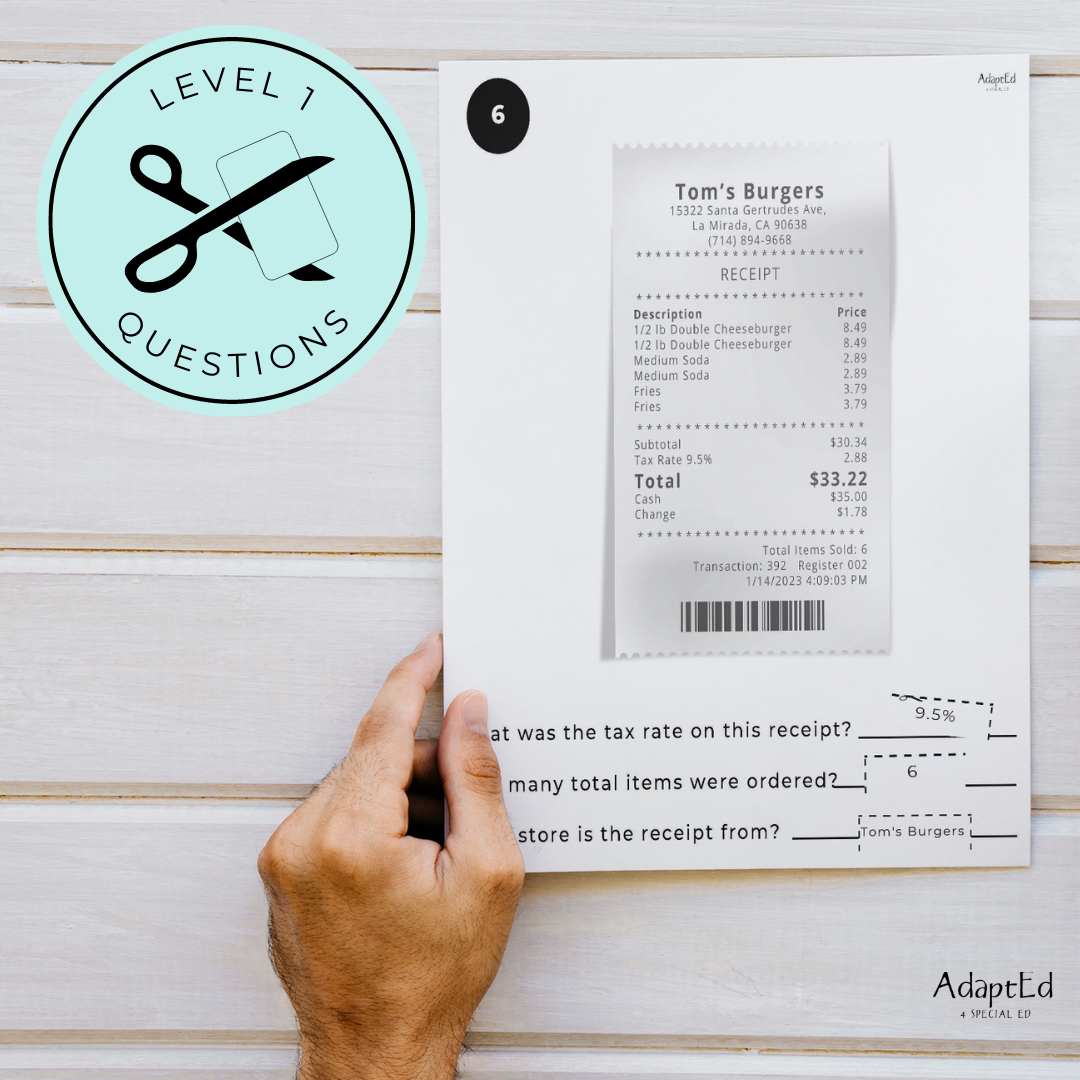
Receipt Reading Comprehension (Printable PDF)
Many students with intellectual disabilities struggle to understand the basics of financial literacy, and yet it is an essential skill they need in order to live independently.
This includes being able to read and comprehend receipts in order to understand where their money is going.
This resource was designed to introduce and help students practice the important life skill of reading and understand receipts they get when out and about.
With this download, students will be exposed to a set of receipts and be asked to answer a variety of questions relating to cost, date, time of transaction, tax rate, etc.
This resource comes with 156 page: and includes 4 differentiated levels and sorting tasks.
Why Teach Students How to Read Utility Bills?
Teaching students with intellectual disabilities how to read and comprehend receipts equips them with a practical knowledge that can be applied on a daily basis.
Not only does it help them become financially literate but also provides invaluable life skills for independent living. It helps give them confidence in their ability to make decisions independently, instead of relying on others for assistance.
Moreover, by learning how to navigate finances on their own terms, it empowers those with intellectual disabilities to take control over their own lives and make smart choices that suit them best.
How to Use This Resource in Your Classroom
This resource was designed to be used in a special education or autism classroom, but can also be used with English language learners or any other student who could benefit from extra practice reading environmental print.
To use this resource, simply print out the desired number of worksheets and have students complete them individually or in small groups.
These worksheets are a great way to introduce environmental print reading comprehension to your students or as a review for students who have already been introduced to this skill.
These worksheets can also be used as part of a larger lesson on budgeting or household expenses.
Teaching your students how to read environmental print is an important step in preparing them for success in adulthood.
This resource was designed to help you introduce this skill in a fun and engaging way.
If you have any questions about how to use this resource in your classroom, please don't hesitate to contact us at krystie@adapted4specialed.com. We're always happy to help!
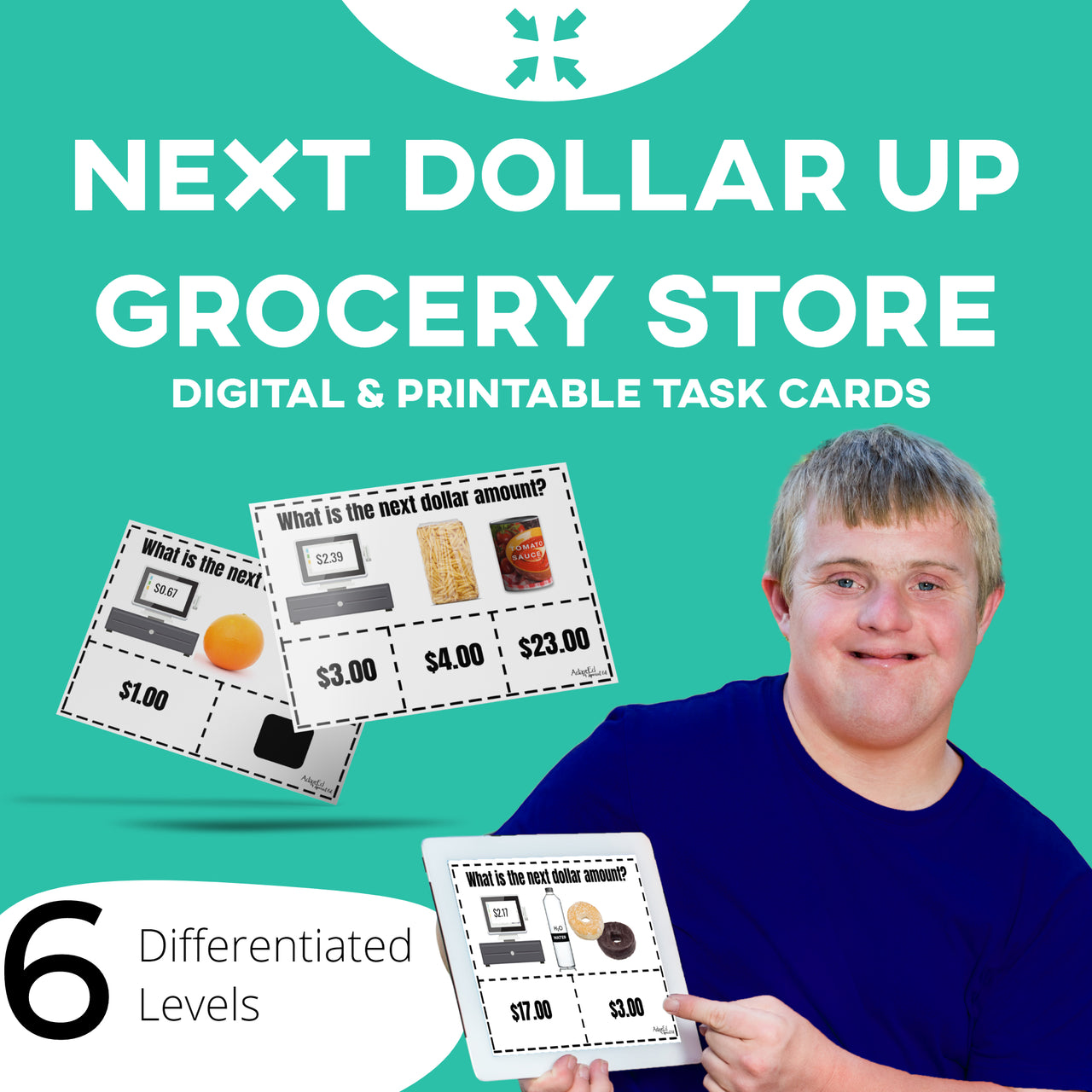
Task Cards: Next Dollar Up: Grocery Store (Interactive Digital + Printable PDF)
Gives Your Students the Hands-On Classroom Prep They Need to Pay With Confidence
PDF | 165 Pages | Digital Versions Saved on Google Slides
Set up is so easy, just print and laminate or click "make a copy" of the digital versions.
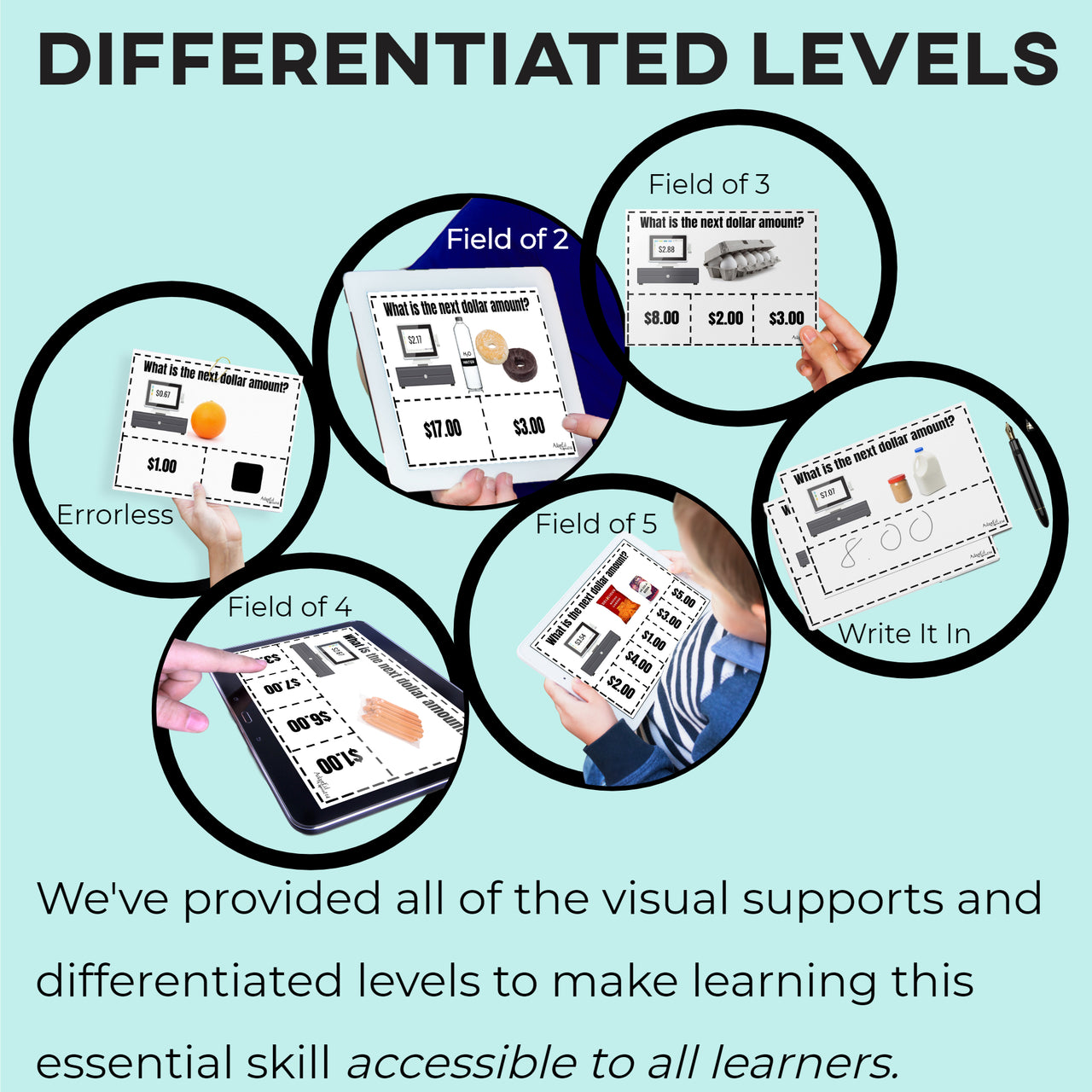
✓ 6 Levels of Differentiation! From errorless to write it in. We've got all of your student's levels covered. ✓ Low Prep/ No Prep ✓ Data Sheets (that are also EDITABLE) ✓ Functional Life Skill: Grocery Store Themed✓ Number Lines✓ Dollar Bills (US)
What is Next Dollar Up
What is the Next Dollar Up Strategy?
Next dollar up is giving an extra dollar over the amount due.
In a grocery store if you're purchasing chips and a drink it might cost $4.68. Using the next dollar up strategy you would pay the clerk $5.00.
Why Teach Next Dollar Up
Why It's Important to Teach...
The next dollar up strategy can empower our students to be much more independent in the community.
When they can determine if they have enough money to make a purchase, and know how much money to give the clerk they can go to the store on their own!
Students are to place the clip on the next dollar amount.This is a great way to have students work on purchasing items and learning dollar up.
Increase the skill level by providing them with bills and have them create the next dollar amount. All pictures are real photographs in order to encourage generalization and independence.


When Learning Hits the Wall
When learning gets stopped in its tracks, something is in the way.
Our newest handbook, When Learning Hits the Wall, helps educators make sense of those moments—when a student shuts down, rushes through work, or simply disengages—and respond with clarity instead of guesswork, even when they’ve already tried “everything.”
It focuses on helping identify what system is breaking down in the moment and what needs to change so learning can resume. The book introduces a practical, research-grounded, barrier-based framework for matching support to real barriers—while keeping learning goals intact.
Choose Digital, Print, or Both to access When Learning Hits the Wall.
How This Book Supports Educators, Teams, and Families
Better understand why learning breaks down in the moment
Respond to shutdowns, rushing, and disengagement with clarity
Match support to what’s blocking access
Keep learning goals intact while restoring access to learning
Who this is for (and who it’s not)
Teachers in inclusive classrooms who need practical, in-the-moment ways to respond when students shut down, freeze, rush through work, or disengage
Educators asked to “differentiate” or “provide accommodations” without a clear framework for deciding what actually needs to change
Teachers supporting twice-exceptional, undiagnosed, or inconsistently accessing learners, where needs shift depending on task, pace, or environment
School leaders and instructional coaches working to improve consistency and accuracy in support decisions across classrooms
IEP and problem-solving teams frustrated by vague accommodations (like “preferential seating” or “extra time”) that don’t reliably restore access
Teams seeking clarity without increasing documentation or compliance burden
Parents and caregivers trying to understand why supports aren’t working—not just what supports are being used
What’s inside
This book provides a clear, repeatable way to understand why learning breaks down—and how to restore access when it does.
First: A practical framework for identifying learning breakdownsLearn how to better identify what’s actually getting in the way when a student freezes, shuts down, rushes, or disengages.
Then: A shared language for understanding barriersClarifies the difference between task demands, domains, hidden barriers, and access conditions—so decisions stay focused and consistent.
At the core: The six hidden barriers that drive most learning strugglesClear explanations of processing speed, working memory, task initiation, attention shifting, organization & sequencing, and regulation load—with real classroom examples.
Tools for identifying barriers in the momentQuick scans, flowcharts, and observation prompts designed to support real-time decisions, not after-the-fact analysis.
Guidance for matching support to the barrier—not the behaviorLearn when accommodations restore access, when modifications are appropriate, and why good intentions sometimes lead to the wrong support.
Barrier-based accommodation examples that actually generalizePractical ways to adjust pace, language, structure, and conditions so students can engage with the same learning goals.
Disability snapshots as starting points—not conclusionsADHD, autism, dyslexia, DLD, mental health, intellectual disability, trauma, and TBI—included to support observation and context, not to prescribe support.
Language that protects dignity and restores accessScripts and framing that help students re-enter learning without increasing pressure, shame, or confusion.
This book is designed to be used flexibly—read cover to cover, referenced during planning, or pulled out in the middle of a tough moment when learning hits the wall.
Below is the full table of contents, so you can see exactly how the framework is structured.
Formats, delivery & purchase orders
📦 Spiral-bound print
💻 Digital PDF — instant access
Purchase orders accepted. Email service@adapted4specialed.com
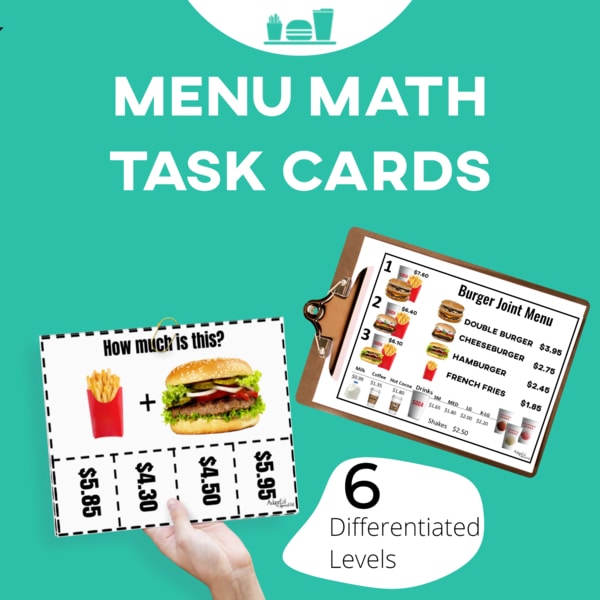
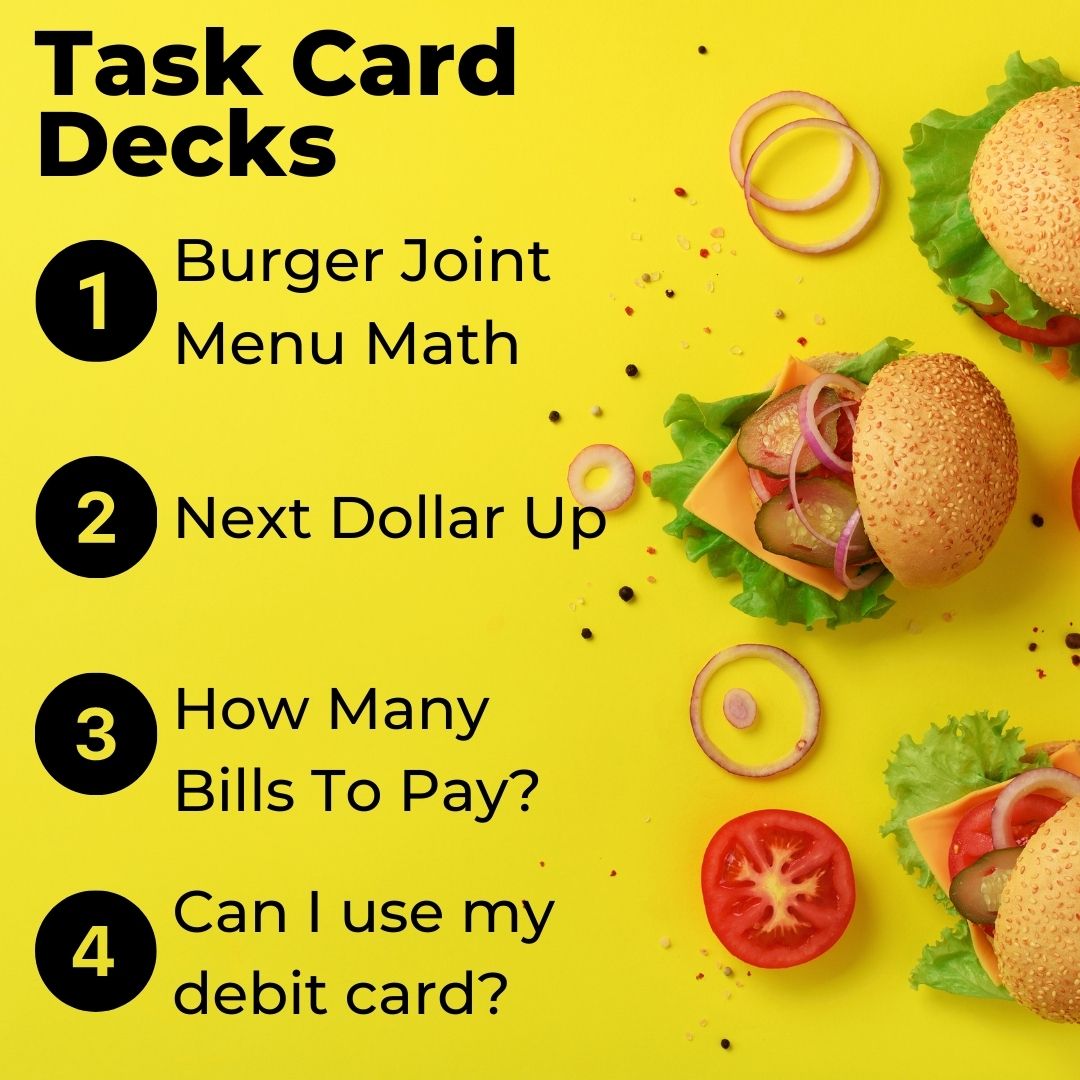
Task Cards: Menu Math Burger Joint, Next Dollar Up, Bills, Debit Card (Printable PDF)
Gives Your Students the Hands-On Classroom Prep They Need to Go Out Into the Community & Pay With Confidence
Menu Math
👉 6 Levels of Differentiation! From errorless to write it in. We've got all of your student's levels covered. 🕰️ Low Prep 📋 Data Sheets (that are also EDITABLE) 🍔 Functional Life Skill: Burger Joint Themed
384 DIFFERENTIATED Task Cards!
Learners are to click or place the clip on the dollar amount.
Increase the skill level by providing them with bills and have them pay for the items.All pictures are real photographs in order to encourage generalization and independence.
Next Dollar Up
Your students will clip or circle the price amount of the menu item(s),
384 Task Cards (4 per page)
✓6 Levels of Differentiation. We've got all of your student's levels covered. ✓ Errorless, Field of 2, Field of 3, Field of 4, Field of 5, Write It In✓ Data Sheets (that are also EDITABLE) ✓ Low Prep✓ Functional Life Skill
How Many Bills?
Next dollar up is a fantastic skill, but most of the time, we don't have just the exact right amount of bills.
Now you can conquer teaching your students how many of each bill they should use when paying. Instead of handing over their whole wad of cash. 🤷
Your students will clip or circle the number of bills they need to make the purchase.
Set includes: US Dollar, CAD and AUD Currencies
480 Task Cards (4 per page)
✓2 Levels of Differentiation. (counting supports over bills, just bills) ✓ 10 sets total: $1, $5, $10, $20 dollar bills ✓ Data Sheets (that are also EDITABLE)✓ Low Prep✓ Functional Life Skill
PDF | 15.6MB | 139 Pages
Set up is so easy, just print and laminate!
Increase the skill level by providing bills and have your students practice counting them out and making purchases.
All pictures are real photographs in order to encourage generalization and independence.
Debit Card: Do I have enough?
These task cards have your students determining if they have enough money to use their card to complete the purchase.
These are perfect for older students who are making purchases out in the community, or those kiddos who find burgers and money to be motivating to do math!
Comes with 208 task cards in 4 differentiated levels
✓ 4 Levels of Differentiation! We've got all of your student's levels covered. Errorless, Yes/ No, Write It In, Do the Math: Find the New Balance. ✓ Low Prep✓ Data Sheets (that are also EDITABLE) ✓ Functional Life Skill
PDF | 8.6 MB | 76 pages
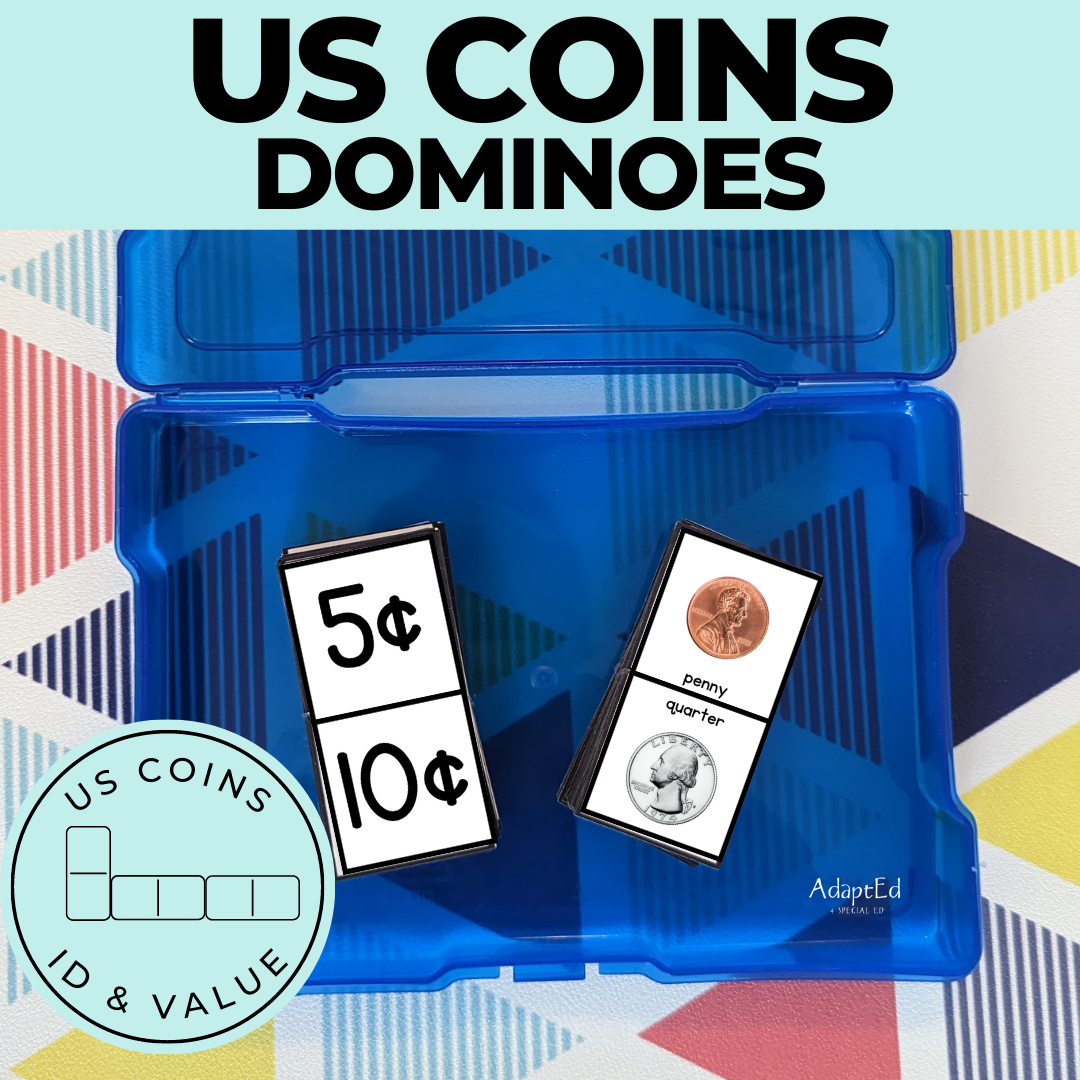
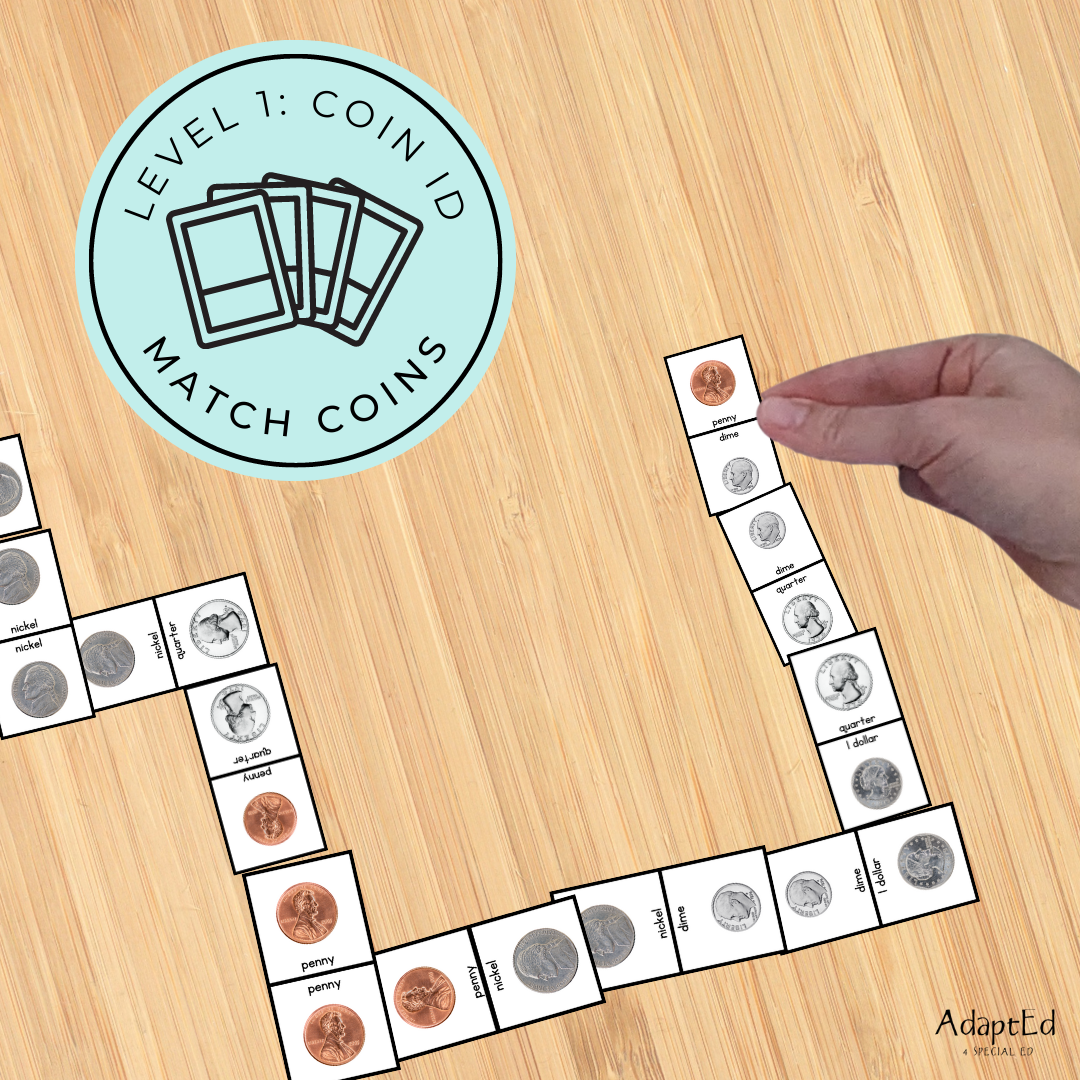
Money Games: Coin Identification ID and Value Dominoes (Printable PDF)
Our coin identification and value dominoes can be printed and prepped in less than five minutes, and only 2 sheets of paper (per set)!
They're simple, budget-friendly and an excellent option to provide hands-on learning experiences that are both engaging and effective.
What's Included:
2 sets of dominoes - Coin ID and Value (28 dominoes in each set)
US coins pennies, nickels, dimes, quarters, half dollars, Susan B. Anthony Dollars and Sacagawea Dollars.
Two size options - small (1.2 in x 2.5 in) and large (2 in x 4.1 in)
Level 1: Play Coin ID and Value Options Separately
Level 2: Mix coin ID and Value dominoes together
Benefits:
Prep time is minimal - our dominoes can be printed and prepped in less than five minutes
Storage is simple - store each set separately or paperclip them together for easy storage in a pencil pouch or plastic zip top bag.
Research shows that hands-on learning centers are effective for special education students.
Increase engagement by providing tactile learning experiences that help to improve understanding and retention.
Levels allow for a personalized approach that meets the individual needs of your students.
So don't wait – upgrade your special education classroom today with printable dominoes from AdaptEd!
This set of coin id and value dominoes will give you everything you need to provide engaging and effective hands-on learning experiences for your special education students!
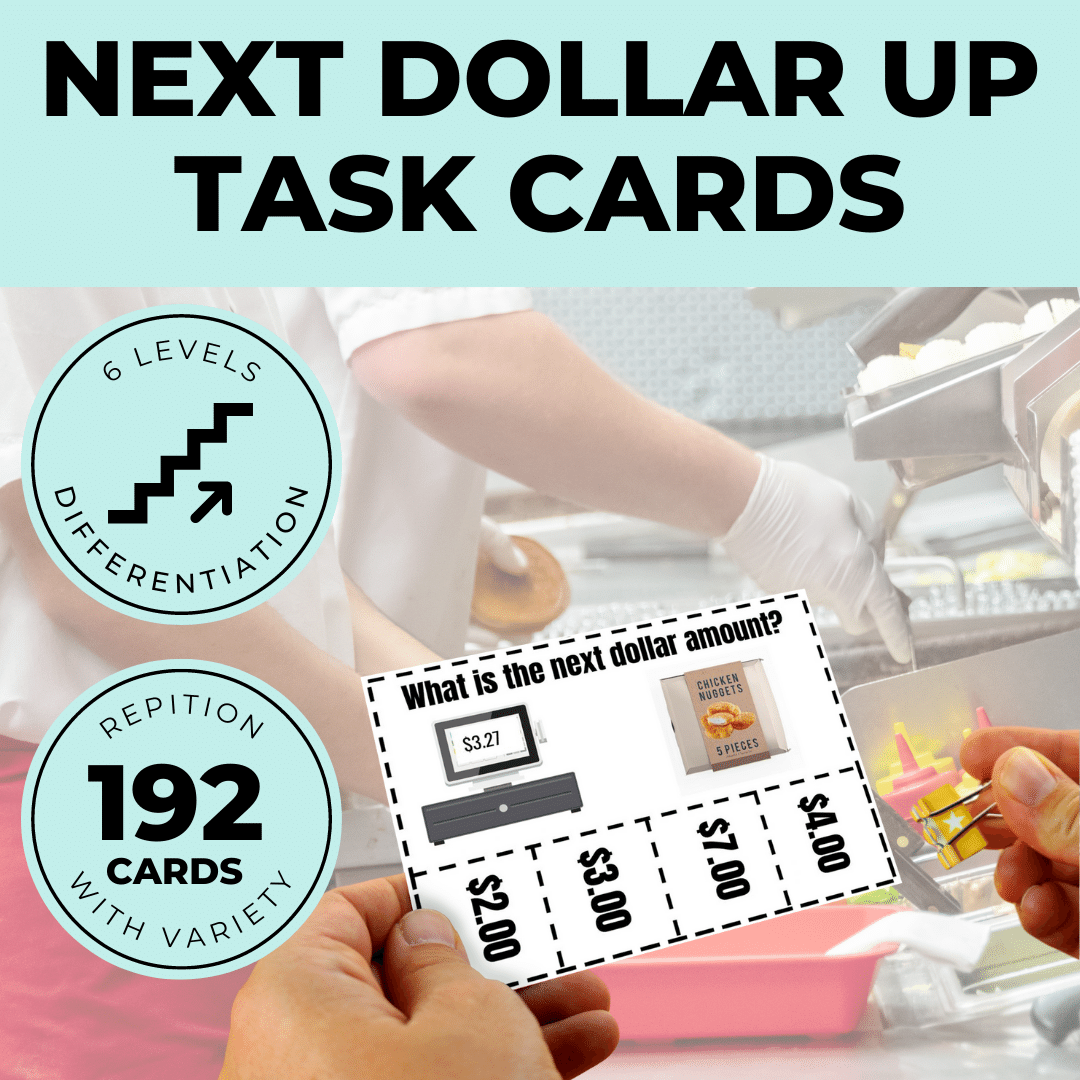
Task Cards: Next Dollar Up: Fast Food (Printable PDF)
Want to Make Your CBI Trips More Effective?
Stop Your Students From Digging Into Their Pockets & Pulling Out Their Entire Wad of Cash Just to Pay for a Candy Bar...
This Set Gives Your Students the Hands-On Classroom Prep They Need to Go Out Into the Community & Pay With Confidence
Set up is so easy use instantly digitally 💻📲, or just print and laminate! 🖨️
Watch the digital task cards in action below. 🎬👀
Included:*
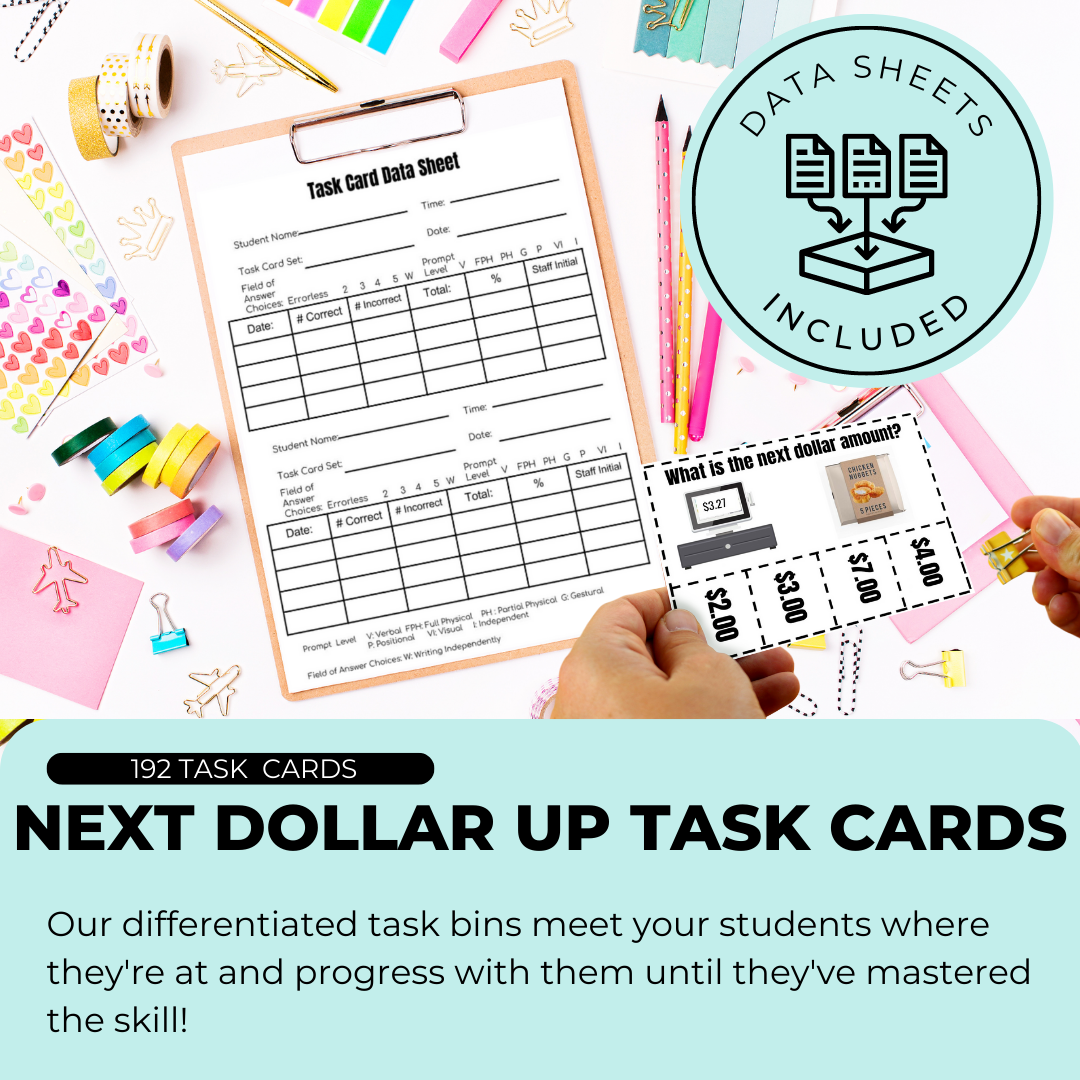
👉 6 Levels of Differentiation! From errorless to write it in. We've got all of your student's levels covered. 🕰️ Low Prep 📋 Data Sheets (that are also EDITABLE) 🍔 Functional Life Skill: Fast Food Themed
192 Task Cards!
Students are to place the clip on the next dollar amount.
Increase the skill level by providing them with bills and have them create the next dollar amount. All pictures are real photographs in order to encourage generalization and independence.
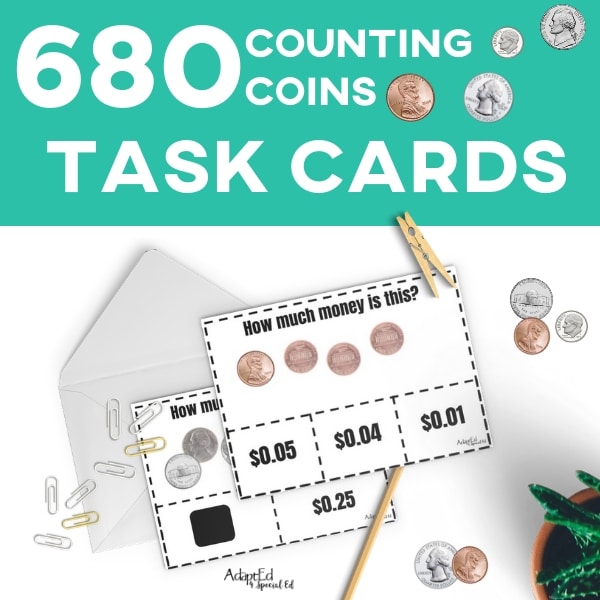
Task Cards: Counting Coins (Printable PDF)
This 680 card set, will have your kids identifying the amount of money the see using pennies, nickels, dimes and quarters.
✓ 5 Levels of Differentiation! From errorless to write it in. All of your student's are levels covered. ✓ Low Prep✓ Data Sheets (that are also EDITABLE) ✓ Functional Life Skill: Money!
Each card says, "How much money is this?" Students circle or place the clip on the amount of they see.
Pennies up to 10 of each coin.
Nickles up to 10 of each coin.
Dimes up to 10 of each coin.
Quarter up to 4 of each coin.
Skip Counting... counting by 1's, 5's, 10's, 25's
Coins are not mixed.
All pictures are real photographs in order to encourage generalization and independence.
00
DAYS 00
HRS 00
MIN 00
SEC
DAYS 00
HRS 00
MIN 00
SEC
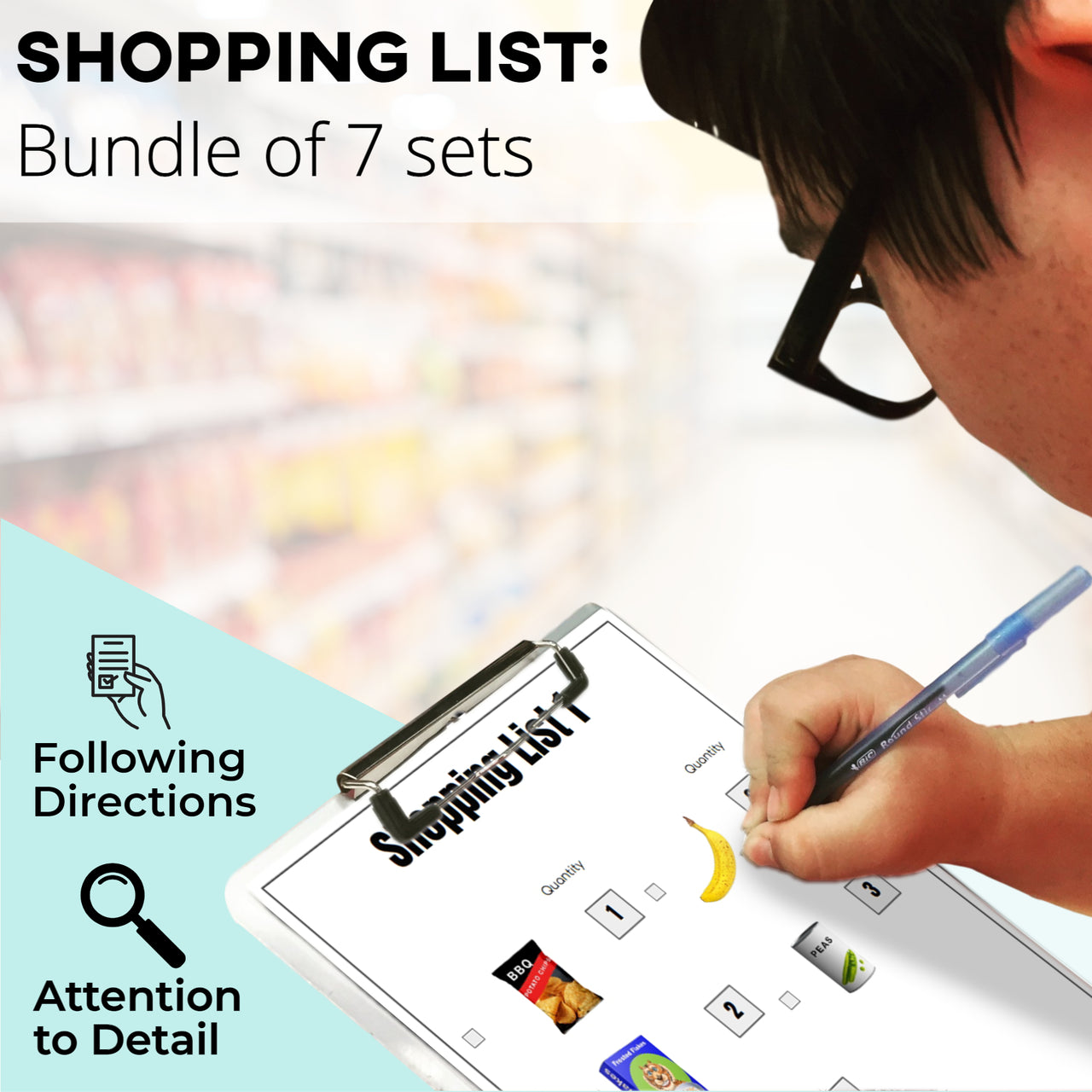
Grocery Store Shopping Lists Mega Bundle (Interactive Digital Sets + Printable PDF's)
In 2019, only 30.9% of people with disabilities (ages 16-64) were employed.
It's out mission to change that!
It's time to build the skills they'll need for a bight future TODAY.
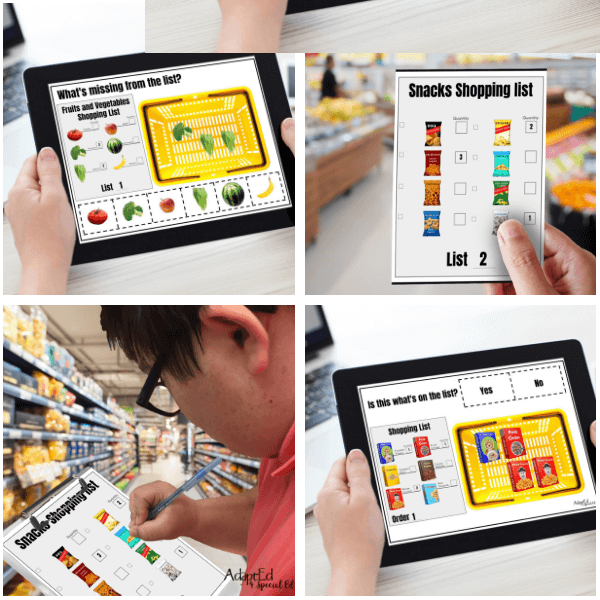
This set includes 7 sets of Shopping Lists Activities that mimic different grocery story aisles.
🍎 Fruits and Vegetables🥫 Canned Foods🍟 Chips and Snacks🍦 Ice-Cream🥤 Drinks and Sodas 🥣 Cereal🛒 Mixed Foods
Included Digital Activities:
Watch the video below to see one of the digital versions in action! + printables make it quick and easy for techies and non techies alike...
Shopping List -175 Shopping Lists with Printable Hands-On Manipulatives + Visual Supports: Drag and drop virtual activity
Shopping Lists: Reading - 175 Written Orders Shopping Lists with Printable Hands-On Manipulatives + Visual Supports: Drag and drop virtual activity
Included Printable Activities:
"Is this what's on the list?: Yes/no" - 175 task cards
""What's wrong with this basket?" (choose the food that shouldn't be there)" - 175 task cards
"What's missing from the list?" (choose the item that is missing) - 175 task cards
Shopping List: 175 Shopping Lists with Printable Hands-On Manipulatives + Visual Supports
Shopping List: Reading 175 Written Lists with Printable Hands-On Manipulatives
Digital Setup:
You can get started with the interactive digital versions 💻 in a matter of SECONDS.
The PDF download contains the links to the digital version as well as the print option. This set can also be printed and used as a hands-on task bin.
Digital Versions are saved on Google Slides™
You can use this on either a computer, Chromebook or tablet.
This video walks you through the steps to getting this setup and into your student's hands!
Everything is ready to go- your students can be using these in just a few minutes.
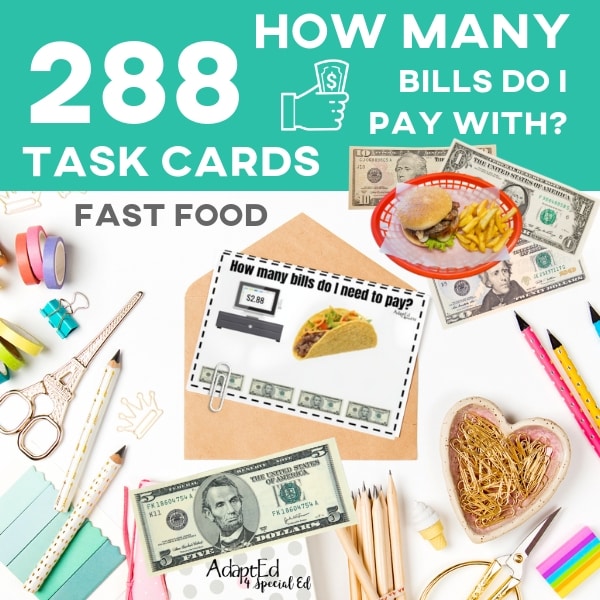
Task Cards: Fast Food | How Many Bills Do I Pay With? (Printable PDF)
Want to Make Your CBI Trips More Effective?
Stop Your Students From Digging Into Their Pockets & Pulling Out Their Entire Wad of Cash Just to Pay for a Candy Bar...
This Set Gives Your Students the Hands-On Classroom Prep They Need to Go Out Into the Community & Pay With Confidence
Next dollar up is a fantastic skill, but sometimes your students aren't going to have just the exact right amount of bills.
Now you can conquer teaching your students how many of each bill they should use when paying. Instead of handing over their whole wad of cash. 🤷
Your students will clip or circle the number of bills they need to make the purchase.
288 Task Cards (4 per page)
✓2 Levels of Differentiation. (counting supports over bills, just bills) ✓ 8 sets total: 1, 5, 10, 20 dollar bills (2 levels of each) ✓ Data Sheets (that are also EDITABLE) ✓ Low Prep✓ Functional Life Skill
PDF | 13.2 MB | 92 Pages
Set up is so easy, just print and laminate!
Increase the skill level by providing bills and have your students practice counting them out and making purchases.
All pictures are real photographs in order to encourage generalization and independence.
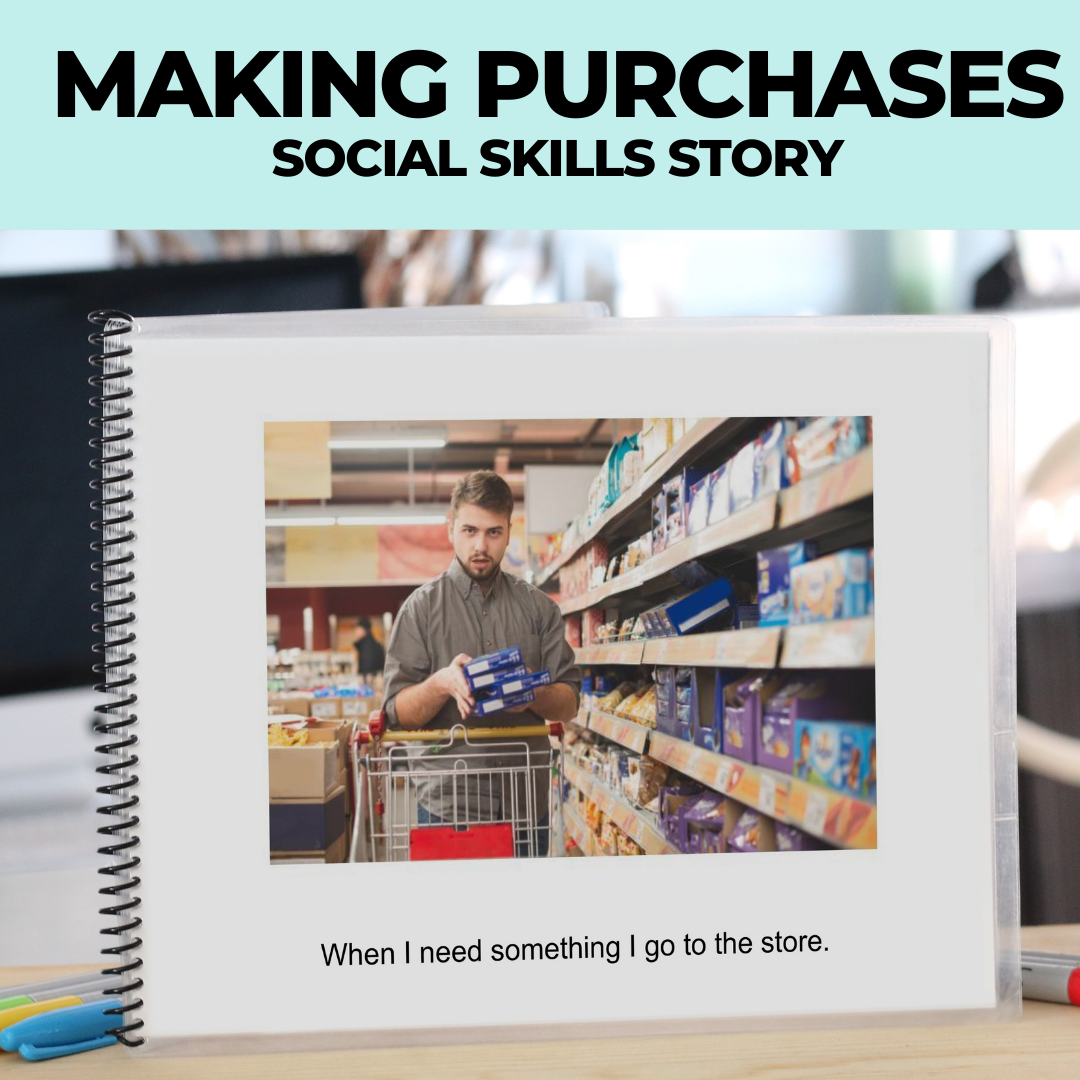
Social Skills Story: I Can Pay For Things | Making Purchases: Editable (Printable PDF )
Do your students know how to make a purchase while out in the community?
This 12 page social skills story will teach them how! With step-by-step instructions and accompanying photographs, you'll be able to confidently buy items they need without any trouble.
12 page social skills story
Print and bind into a book, or just read it digitally on any of your devices.
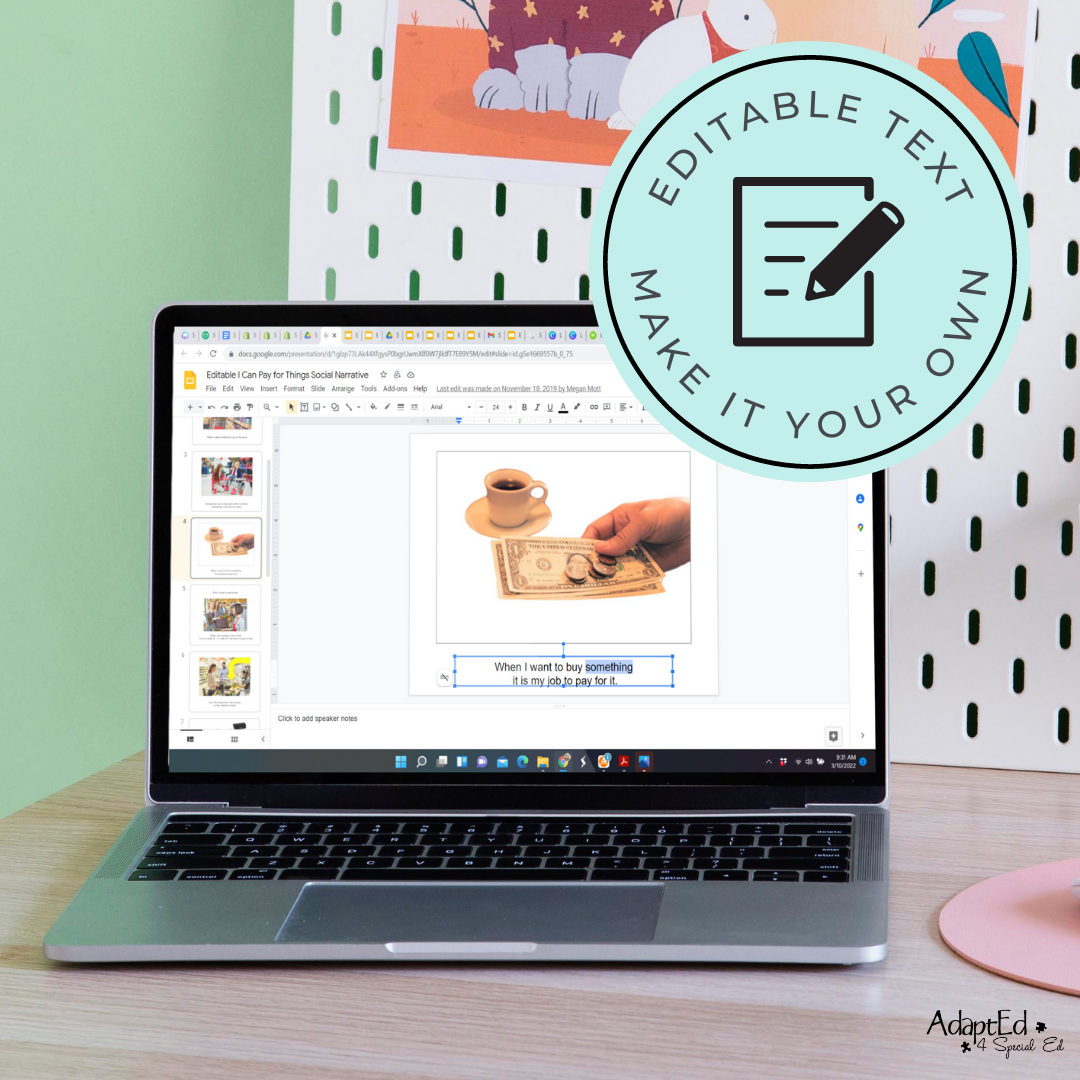
Editable Version Saved on Google Slides
P.S. If you like this book, you may be interested in checking out our full collection of home life related social narratives.
Editable*
Want to edit this book?
Possibly add in a student name or change a picture? 📷
You can do that now! Just click the link in the back of the book and you'll be taken to an editable version saved in google slides! 💻
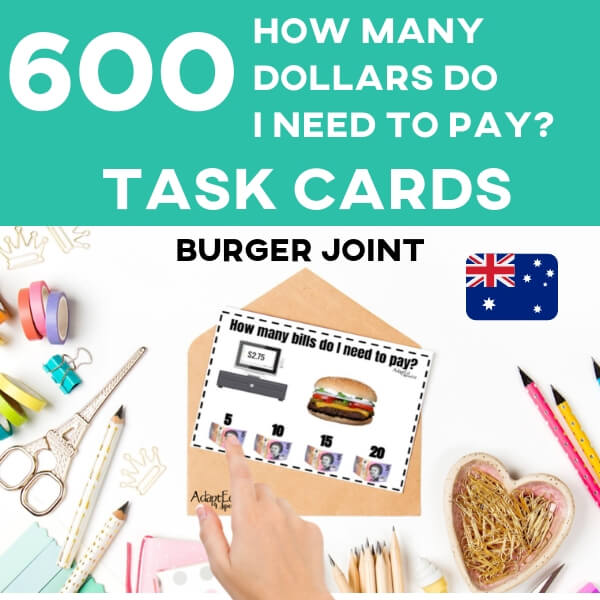
Task Cards: How Many Bills Do I Pay With? Burger Joint: Australian Currency (Printable PDF)
Want to Make Your CBI Trips More Effective?
Stop Your Students From Digging Into Their Pockets & Pulling Out Their Entire Wad of Cash Just to Pay for a Candy Bar...
This Set Gives Your Students the Hands-On Classroom Prep They Need to Go Out Into the Community & Pay With Confidence
Next dollar up is a fantastic skill, but most of the time you don't have the exact right bills to pay to the next dollar.
Now you can conquer teaching your students how many of each bill they should use when paying and watching your students hand over their whole wad of cash will soon be a distant memory. :)
Set up is so easy, just print and laminate!
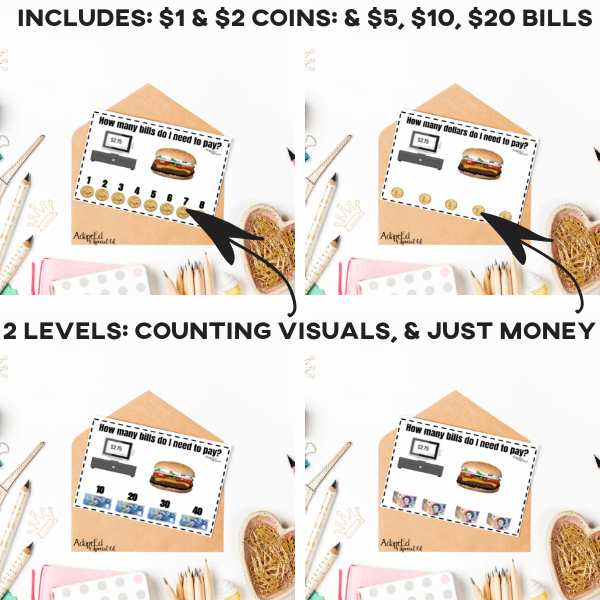
Clip or circle the number of bills they need to make the purchase.
600 Task Cards (4 per page)
✓ 10 sets total: $1 coins, $2 coins, and $5, $10, $20 dollar bills✓2 Levels of Differentiation. (counting supports over bills, just bills) ✓ Editable Data Sheets✓ Low Prep✓ Functional Life Skill
PDF | 15.6MB | 168 Pages
All pictures are real photographs in order to encourage generalization and independence.
Articles
Next
1 of 2
