
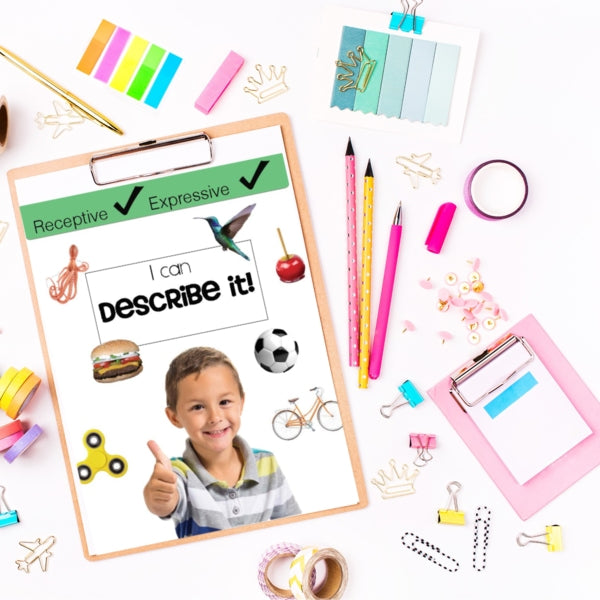
Describe It: Adjectives Set (Printable PDF)
Those pesky adjectives!
They can be such a sticking point for our students.
Are you familiar with the “freeze face” that happens when you ask your student to think of a describing word? We are!
That’s why we developed a system to support our students while they are learning to describe.
Visual supports help the students to feel grounded and more comfortable making their own decisions.
This product includes visual supports/charts to help students describe (RECEPTIVELY and EXPRESSIVELY!) in five different areas:
Food
Animals
People
Vehicles
Toys
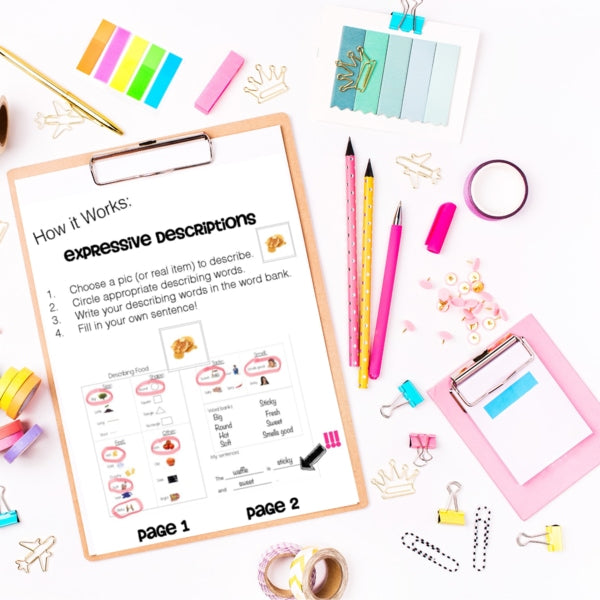
Contains two “How it works” pages explaining the receptive cut and paste tasks and the expressive charting & sentence writing tasks.
You will loooove the simplicity of this re-useable material.
The receptive tasks focus on teaching the meaning of common adjectives. The expressive tasks include charts where the students choose from a selection of available adjectives, a word bank where they collect their adjectives, and a fill-in-the-blank sentence strip where they put it all together.
Oh- and did we mention that this is NO PREP?!?!? Simply print and GO. You’re welcome :)
But the best part? At the end of the task your students will have created their own UNIQUE sentences that include at least 2 describing words!
Make it a party and have each student share their own special sentence!
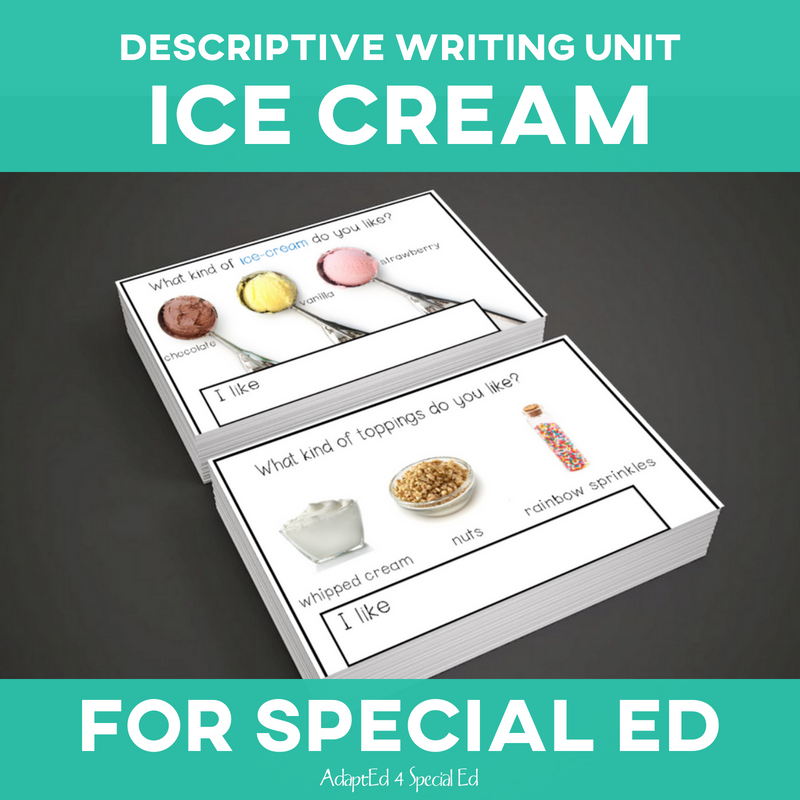
Descriptive Writing Unit: Ice Cream Sundaes (Printable PDF)
This simple unit is highly visual, and provides the necessary support for your students to be able to make choices, sequence the activity and write about it. We like to finish the unit with an ice-cream sundae party where each student makes the ice-cream sundae they described. This is a great way to encourage your students to pay attention to the details! 😉
Details
11 Page PDF
Students will first get to choose which flavor ice cream, syrup flavor, and toppings they would like on their sundae by using visual supports and a sentence starter.
Then they get to "build" their sundaes step-by-step by using the cut-out picture cards.
To complete the activity, students will write a sentence describing what they chose to include in their sundae and how it tasted.
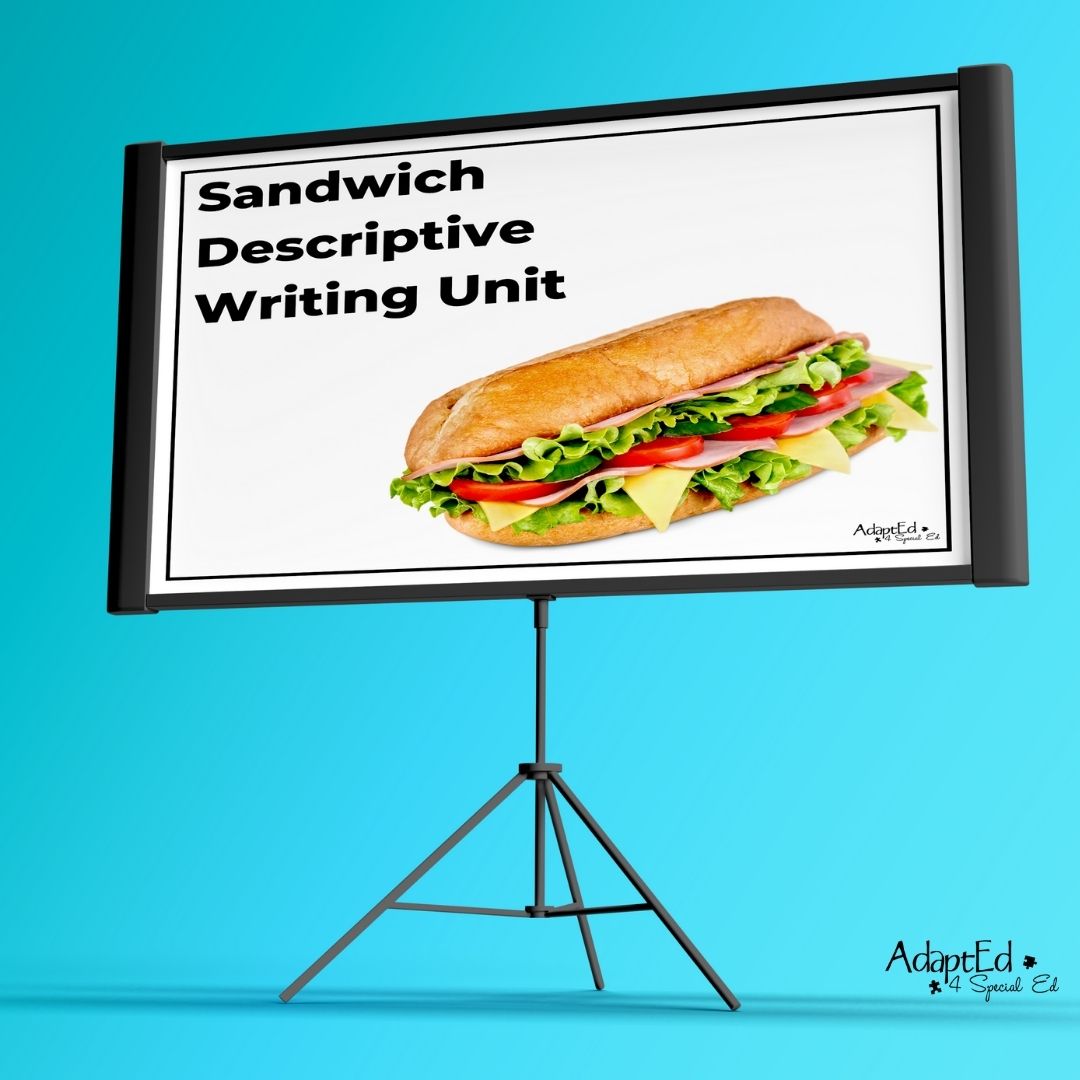
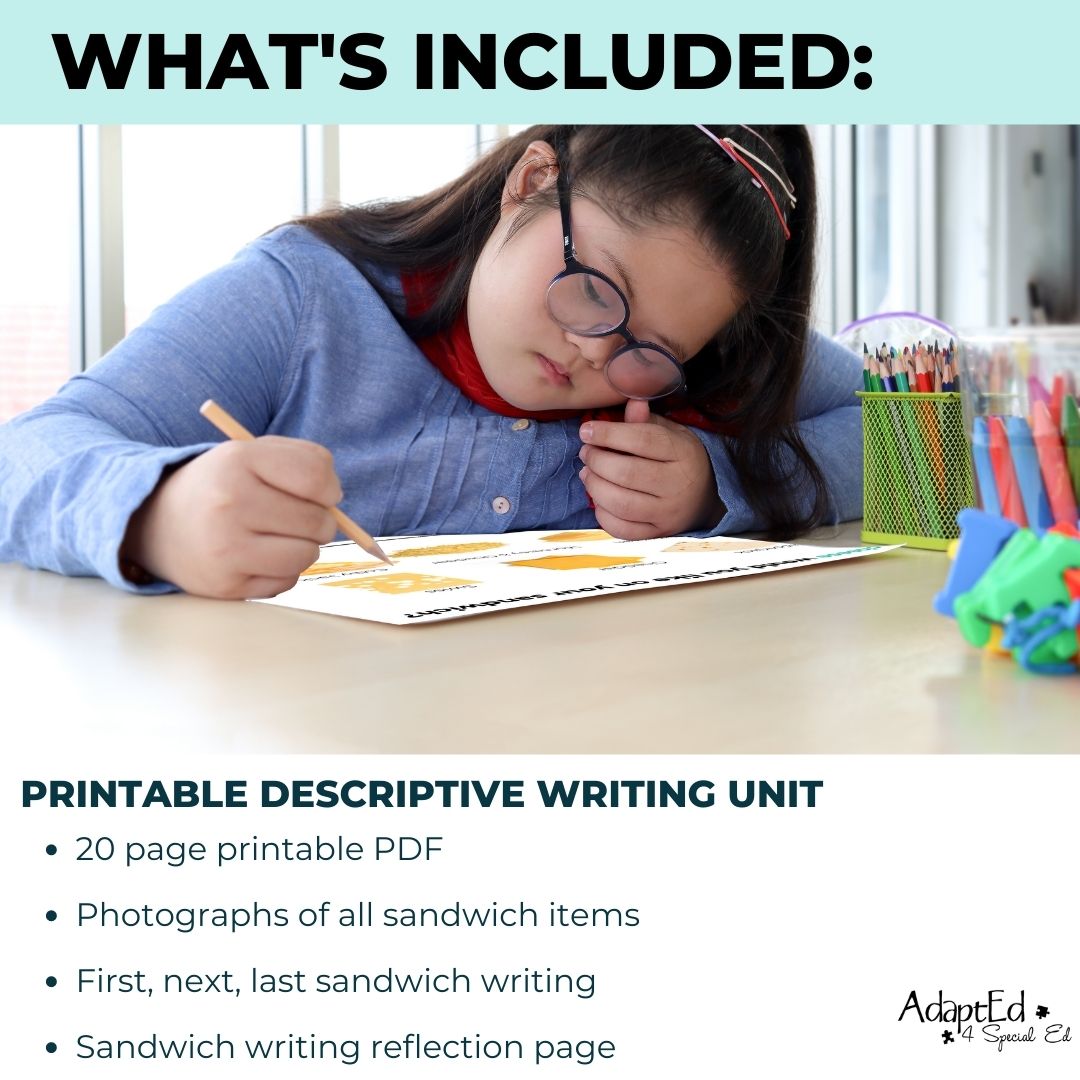
Descriptive Writing Unit: Sandwiches (Printable PDF)
Making your own sandwich is always a creative way to make lunch.
But it comes with so many decisions... type of bread, cheese, sauce, veggies, etc.
Sandwich Descriptive Writing Unit will sharpen students' writing skills by practicing writing and mixing in a little food motivation...
All they have to do is choose what bread they want—toasted or untoasted?
What kind of cheese do they like?
How about a little mayo or mustard or buffalo sauce?
The real question is, what's not to love?
This sandwich descriptive writing unit will have your kids over the moon about creating these wholesome sandwiches.
At the end, let them choose from either heading to their local sandwich shop and ordering one themselves or plan it with these materials for their own school made lunchtime masterpiece!
Tasty meets creativity in this awesome culinary writing adventure you can trust to make any student smile.
Included:- 20 page PDF - Step by step visuals for creating their perfect sandwich.
- First, next, last writing prompts for putting their sandwich together. -a page on a personal reflection where they describe the sandwich they made using descriptive words and end it by writing a sentence or paragraph about the experience.
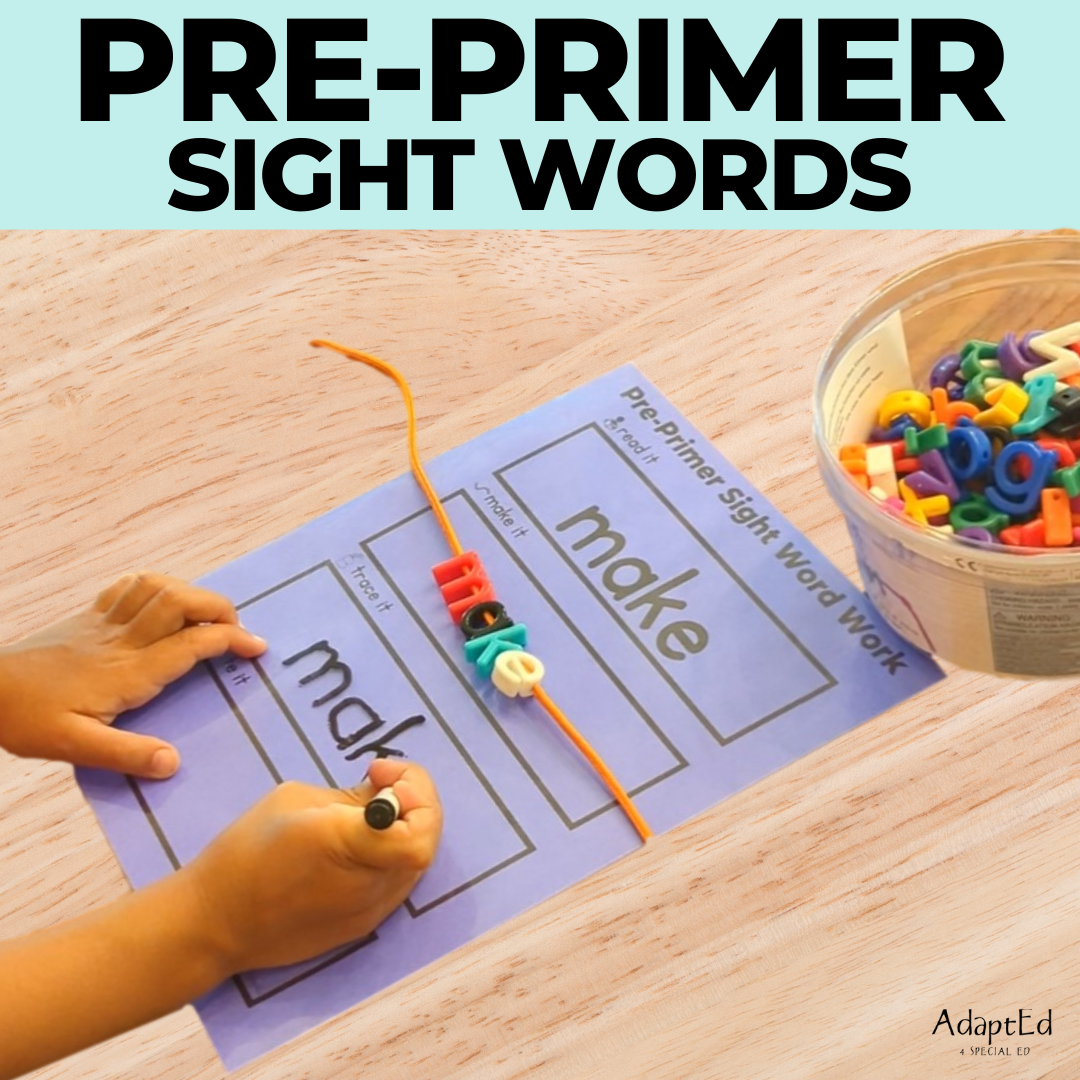
Pre Primer Sight Words Word Work
With Pre-Primer Sight Words Word Work, your students will get plenty of practice with 40 different sight words.
The worksheets in Set 1 have them read the word, trace it, write it, and then make it using magnets or letter tiles.
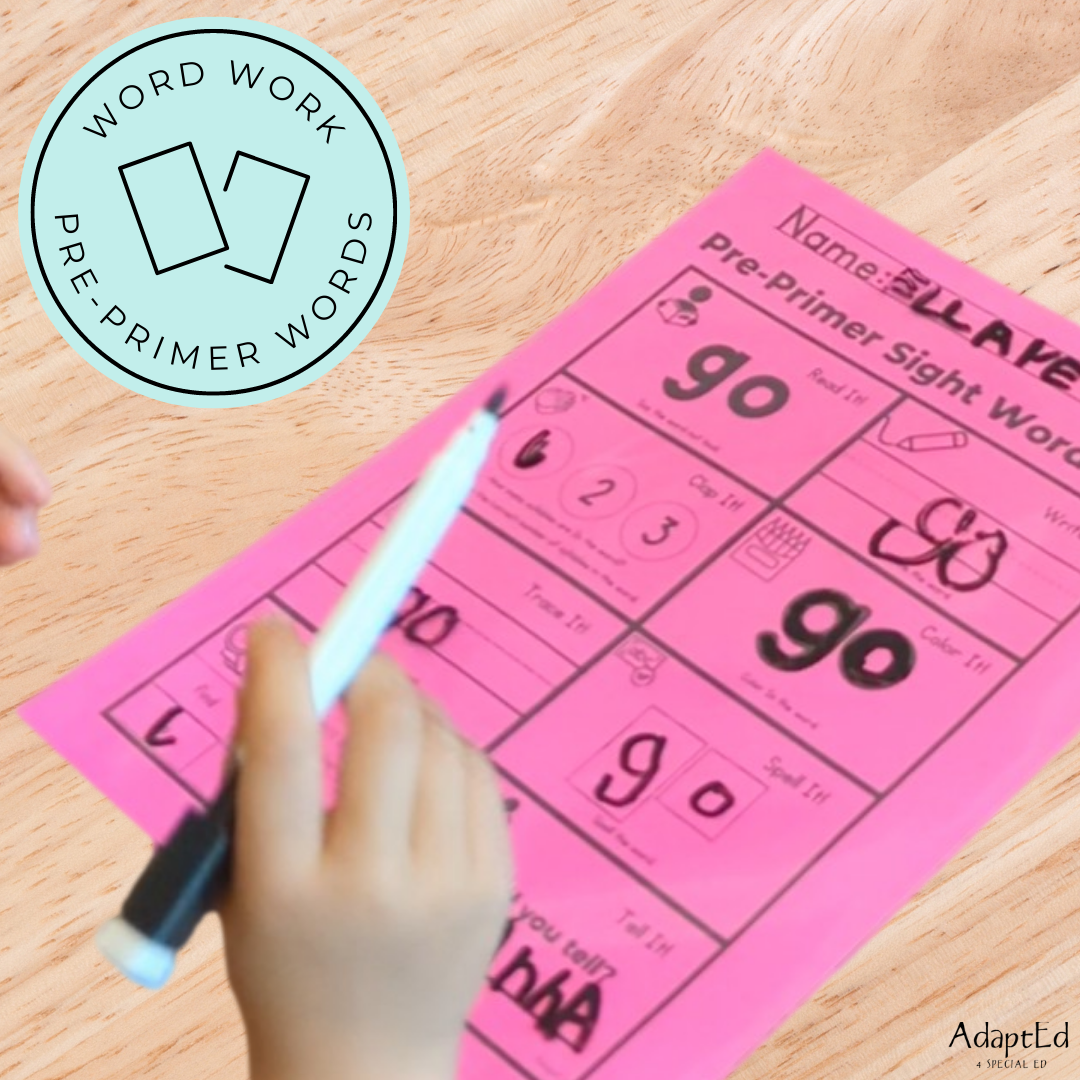
In Set 2, they read the word, write it themselves, clap out the syllables, color in the word family it belongs to, trace it again, spell it out loud, and find it in a word search.
No matter how you use them, these worksheets are an engaging and effective way to help your students learn their sight words!
Plus, it's NO PREP - just print and go!
80 Pre-Primer Work Work Worksheets
Set 1: Read it, Make it, Trace It, Write It
Set 2: Read it, Write it, Clap it, Color it, Trace it, Spell it, Find it
This set is ideal to be used with:
Special Education
Beginning Readers
Struggling Readers
Pre-K to 1st Grade (RTI)
This is perfect for:
Literacy Centers Stations
Morning Work
Finished Bins or "I'm Finished" Work
Small Groups
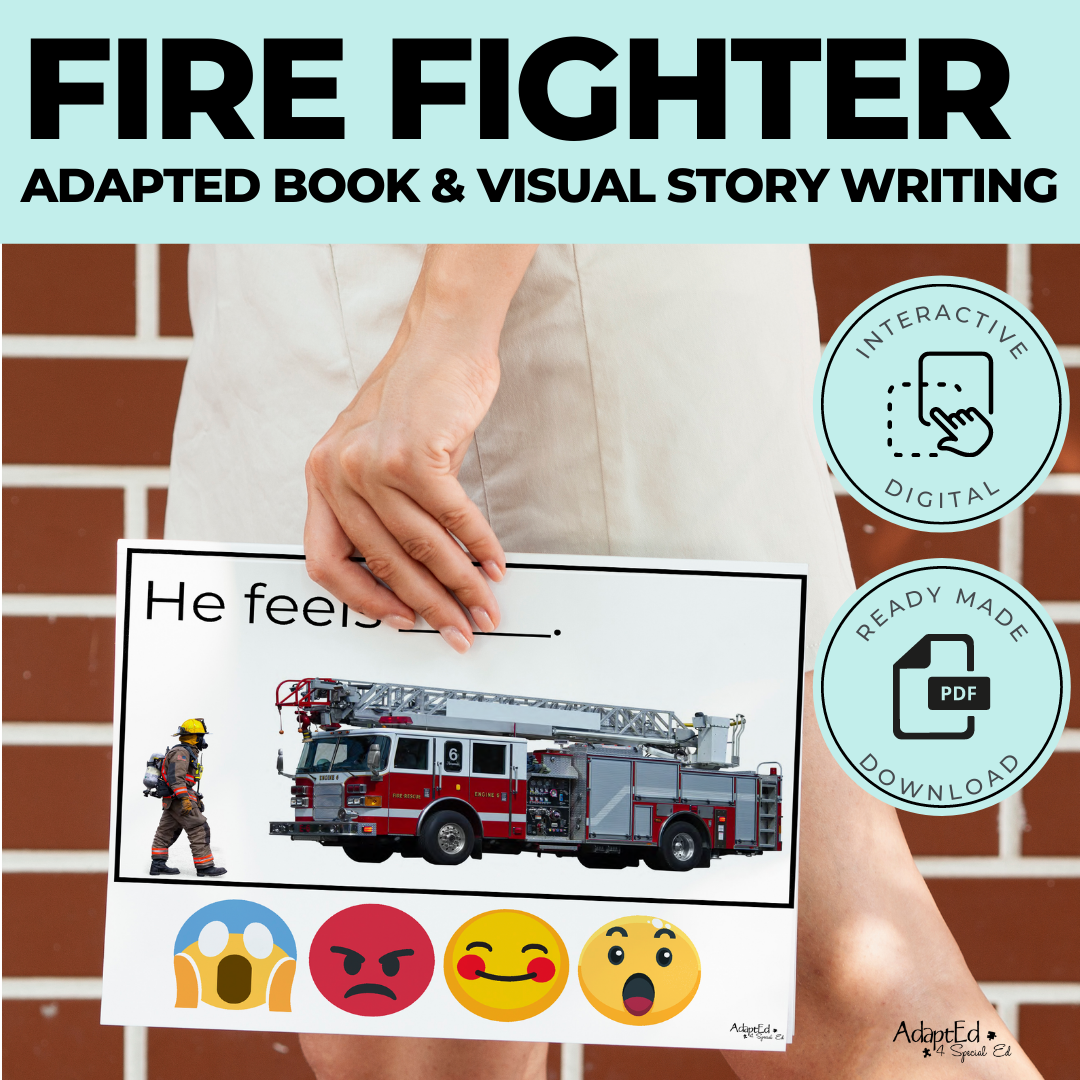
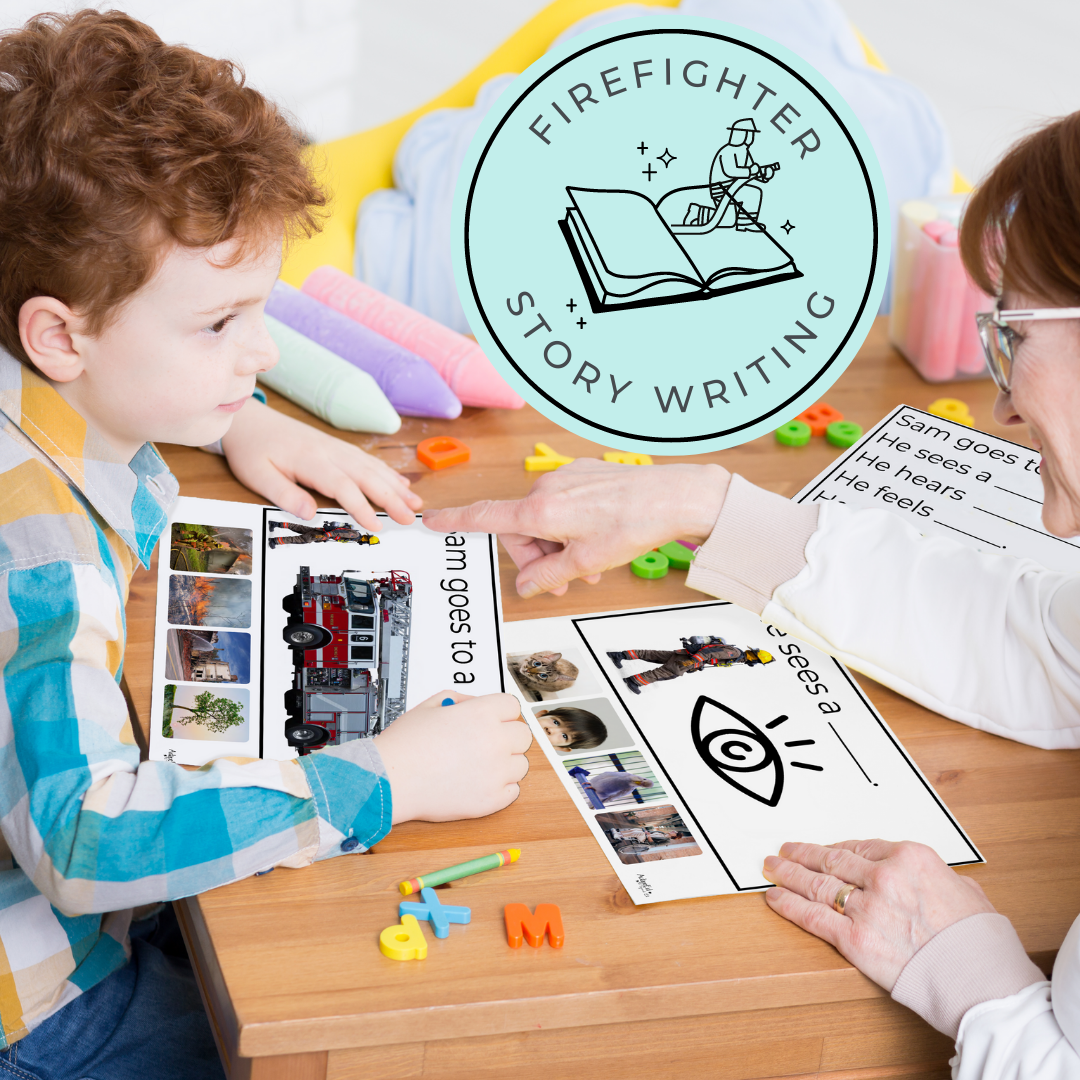
Firefighter Visual Story Writing + Adapted Book (Printable PDF & Interactive Digital)
Visual Story Writing with stories about Sam the Firefighter- has your students create their own story by choosing from a variety of visual supports on each page.Student's choose their own story line sequencing, they first build their own story using manipulatives.
Then, use a sequencing template to put their story components in order and practice their narrative technique!Also, works on sentence building and identifying appropriate emotions!Each story consists of five parts for the students to sequence.This sequencing set includes:
5 Sam the Firefighter Stories:
Printable
Drag and Drop Digital Version
Use this set over and over 200 possibilities per story for a total of over 1,000 possibilities for the entire set!
1 A Firefighter can... Adapted Book
Printable
Drag and Drop Digital Version
57 page PDF | 45 Digital Drag and Drop Pages
