


THE SLP’S GUIDE TO AAC: From Assessment to Implementation
AAC Handbook for SLPs
The SLP’s Guide to AAC: From Assessment to Implementation
AAC shouldn’t require guesswork… but most SLPs are left guessing.
Most SLPs were never taught how to complete a full AAC assessment, choose the right system, or support teams—yet the moment an AAC user lands on your caseload, you’re expected to know it all.
This handbook gives you the structure, clarity, and confidence you should have been handed on day one.
Created by Megan Mott, M.S., CCC-SLP—an experienced, neurodivergent SLP—this guide is the step-by-step reference clinicians wish they had from the start.
Complete AAC assessments with confidence
Understand how to match the right system to the right communicator
Support teams so AAC doesn’t fall apart in real classrooms
Built for real-world SLPs
What You’ll Be Able to Do with This Guide
Complete AAC assessments with a clear, repeatable process
Choose systems & features that line up with communication needs
Train teams without overwhelming them
Model AAC without pressure or unrealistic expectations
Support emergent & conventional literacy for AAC users
Document clearly for IEPs, schools, and insurance
Stop guessing—and start leading AAC teams
Why This Handbook Is Different
This guide doesn’t just talk about AAC—it walks you through the entire process with clear visuals, examples, and real-world guidance.
Move from “I’m not sure what to do next” to “I know exactly how to approach this communicator, this team, and this setting.”
Table of Contents (What’s Inside)
Here’s a readable look at what’s inside the handbook:
Chapter 1: AAC Fundamentals
Who Uses AAC?
Types of AAC
Types of AAC Access
Types of AAC Tools
Chapter 2: AAC Core Values
Different, Not Less
Autonomy
AAC Myths and Truths
Chapter 3: AAC Modeling & Practices
Types of Vocabulary
What Is Motor Planning?
What Is Modeling?
Model Without Expectation
Attribute Meaning
Validate All Communication
Reasons People Communicate
Necessary AAC Strategies
Practices to Avoid
Chapter 4: AAC Competencies
Ask Yourself
Chapter 5: AAC Classroom Tips & Ideas
Communicating for a Variety of Purposes
Chapter 6: AAC & Literacy
An Expanded View of Literacy
Determining the Level of Instruction
Emergent Literacy Instruction
Conventional Literacy Instruction
Assistive Technology & Literacy
Chapter 7: AAC Assessment
Feature Matching: Access Method
Feature Matching: Symbol Features
Feature Matching: Linguistic Features & Vocabulary
Feature Matching: Voice Features
Feature Matching: Display Features
Feature Matching: Positioning & Portability
Feature Matching: Additional Features
AAC Funding Overview
The Assessment Process
Part 1: Gather a Case History
Part 2: AAC Trials
Part 3: Device Recommendations & Documentation
Chapter 8: Appendix
How Big Is the Problem for Me?
Play Activities
AAC Data Sheets
AAC Modeling & Implementation
Learn what implementation looks like when it’s ethical, effective, and doable for busy teams.
Model AAC without expectation or pressure
Introduce AAC in supportive, safe ways
Problem-solve when teams aren’t modeling
Validate all communication—not just words
Avoid common AAC pitfalls (and understand why they matter)
AAC & Literacy
Find practical routines for emergent and conventional literacy—paired with assistive technology supports that make sense in real classrooms.
Tools & Templates Included
Data sheets for all AAC competencies
Device trial templates
Team-training reminders
Lesson ideas
Quick-reference charts
Checklists & guides
Documentation supports
Format Options
Choose the Format That Fits Your Workflow
Physical handbook – premium soft-touch cover, premium paper, and durable metal binding.
Digital PDF – searchable, portable, and ideal for team meetings.
Bundle: Physical + Digital – get both formats for maximum flexibility.
Use the format that makes it easiest to build AAC systems that actually work.
AAC doesn’t have to feel overwhelming or improvised.
The SLP’s Guide to AAC: From Assessment to Implementation gives you the clarity, structure, and confidence every SLP deserves—so you can stop guessing and start leading.
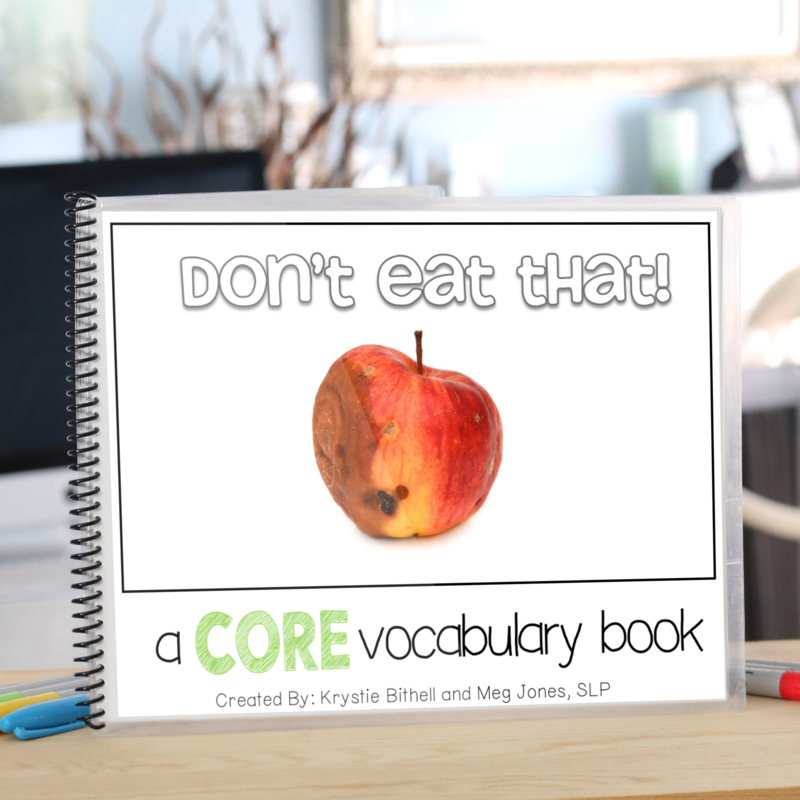

Don't Eat That! Core Vocabulary Reader (Printable PDF)
This book focuses on the core vocabulary targets “eat this" and “don't eat that!”
The terms “this” and “that” are great for replacing unnecessary nouns and they easily generalize to different settings.
We hope you enjoy this CORE vocabulary book!
[ P R O D U C T • I N C L U D E S ]
Includes 17 page book
Information about CORE language, and where to find support to begin the process of going CORE with your students.
Use on your iPad/ tablet to save on printing costs.
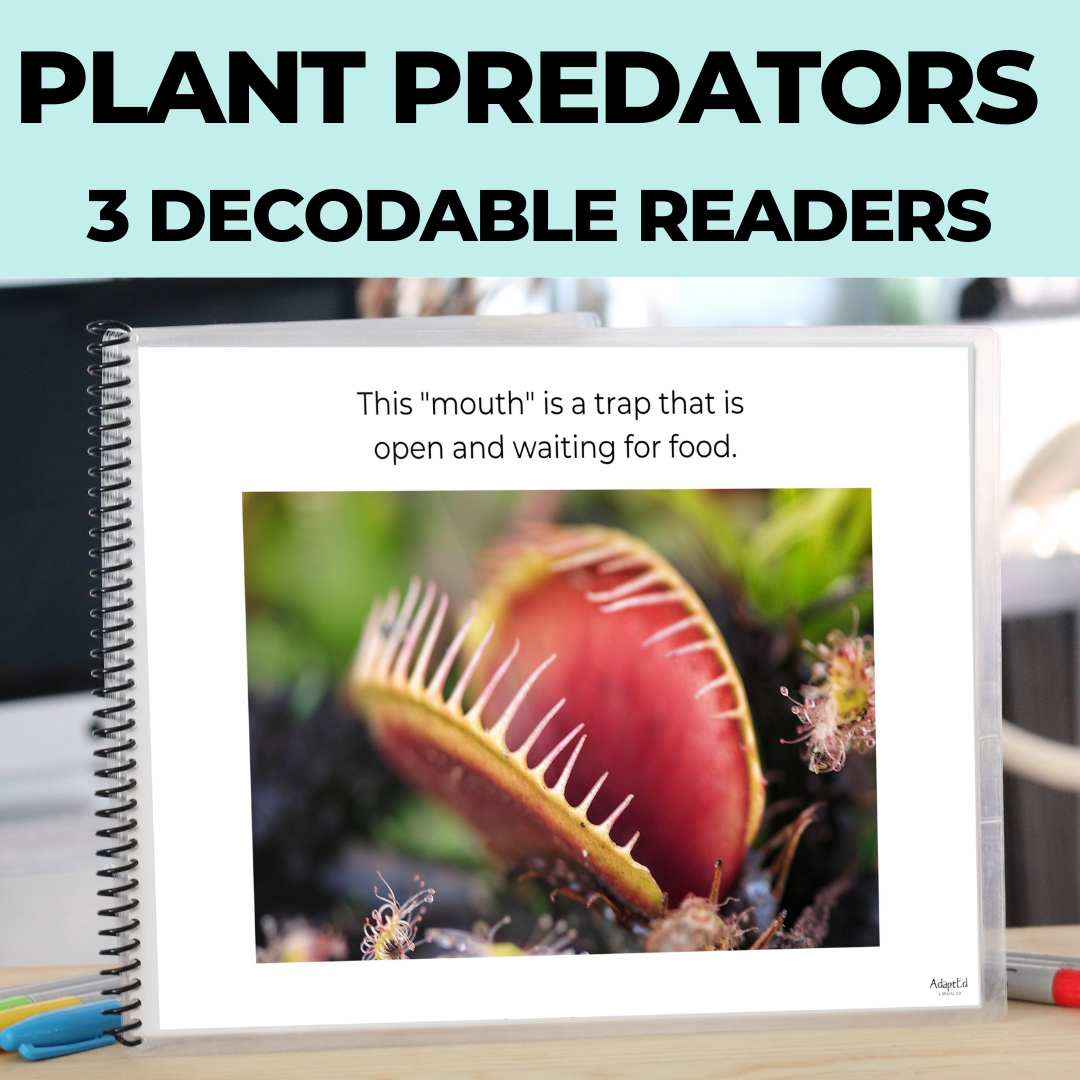
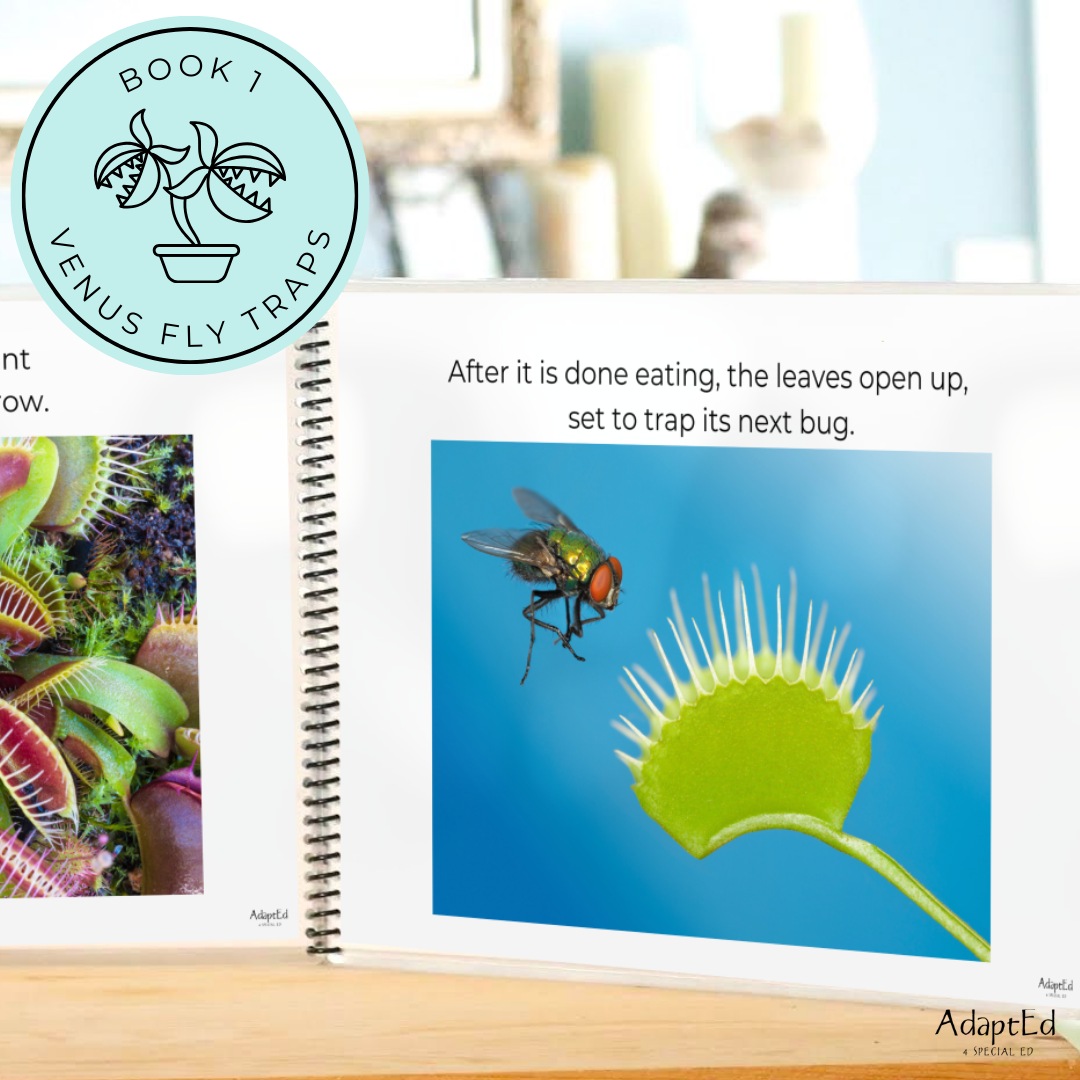
Carnivorous Plants Decodable Readers + Reading Comprehension (Printable PDF)
"The Carnivorous Plants Trilogy: Decodable Readers with a Bite!"
Unveil the thrilling and eerie world of carnivorous plants with our set of three decodable readers! These books are designed to engage even the most reluctant students with their captivating content and real-life images.
"Venus Flytrap: The Plant with a Bite!" - Embark on a journey into the fascinating world of Venus Flytraps! This reader is a treasure trove for curious students, filled with real-life images and intriguing facts about this creepy, crawly-devouring plant.
To ensure your students fully grasp the concepts, each decodable reader concludes with picture-supported multiple-choice reading comprehension questions.
"Pitcher Plants: Nature's Deadly Cup" - Delve deeper into the realm of carnivorous plants with our second installment featuring the enigmatic Pitcher Plants. Real photos and riveting hunting strategies will keep your students engrossed from start to finish.
"Sundews: The Sticky Trap" - Lastly, unravel the sticky secrets of Sundews! Our third decodable reader showcases vivid, real-life images and fun facts that will hook your students from the first page to the last.
Each book is a printable PDF and comes as a digital download file. With a total of 46 pages, each plant has its own separate decodable reader and reading comprehension questions.
Plus, we've added bonus information at the back of to extend the learning using multi-sensory storytelling techniques.
With "The Carnivorous Plants Trilogy," reading becomes an adventure that's sure to ignite curiosity and wonder in every student!

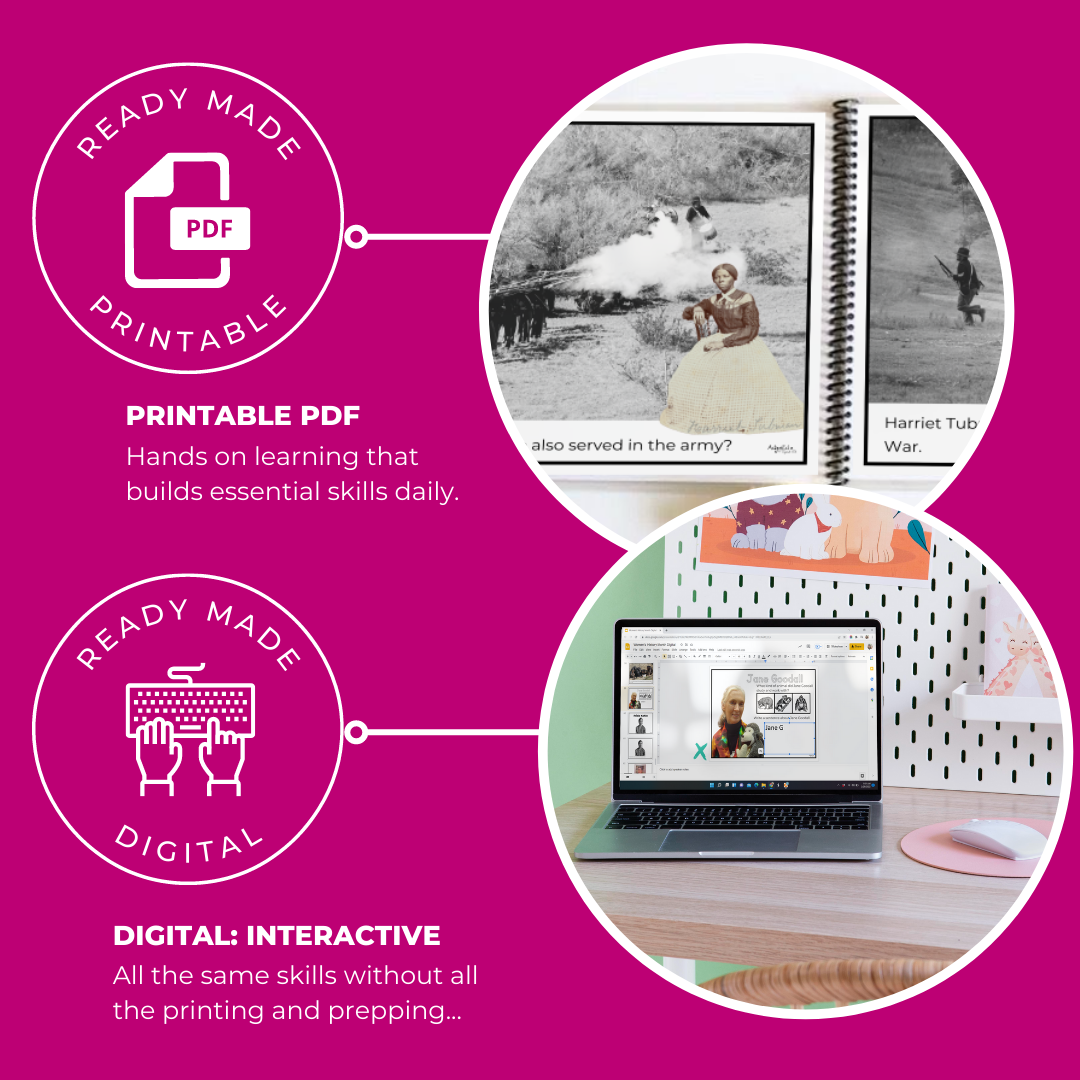
A Celebration of Women's History: 10 Biography Easy Readers
Join us as we take a walk through history and celebrate some of the women who have make history.
Learn about their accomplishments and what made their contributions to society and the world so important.
Each of the 10 easy reader stories is accompanied by a one-page comprehension worksheet.
Upon purchase, a digital pdf that includes all of the stories and worksheets is sent immediately to your email address, ready to download and print in seconds!
78 Page PDF
Digital and Printable PDF Included
Learn about 10 important figures in Women's history.
Included Women
Amelia Earhart
Harriet Tubman
Helen Keller
Jane Goodall
Junko Tabei
Marie Curie
Sally Ride
Stephanie Kwolek
Susan B. Anthony
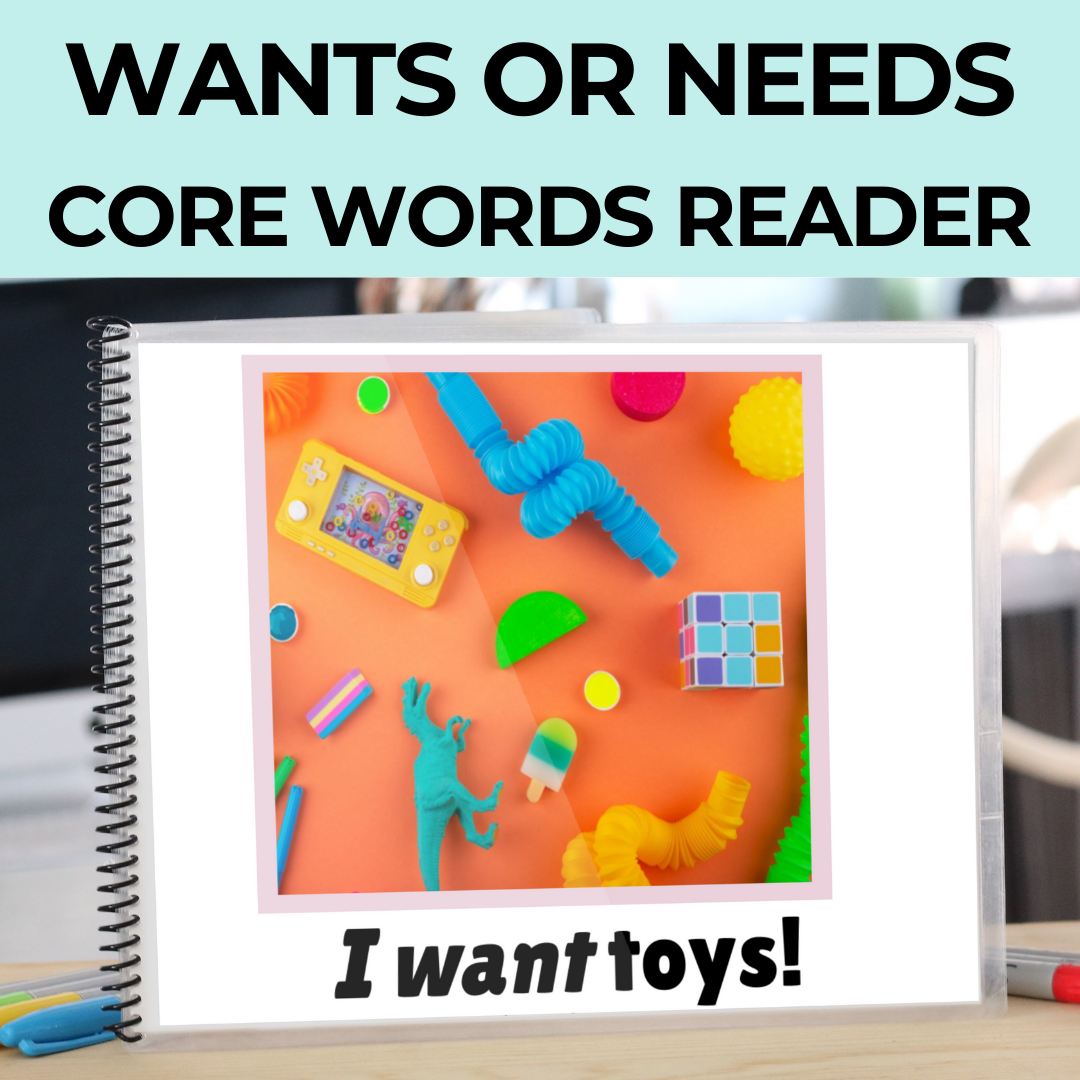

AAC CORE Words Book: Want or Need (Printable PDF's + Digital)
Immerse special learners in a transformative language development journey with our Core Phrase Book and accompanying activities.
Designed to reinforce the core vocabulary words "I + want/need," this resource offers intensive modeling practice and diverse exercises for optimal learning.
Key Features:
Reinforces core vocabulary words "I + want/need"
Provides intensive modeling practice and diverse exercises
Core Phrase Book:
Enhances comprehension and differentiation between wants and needs
Color-coded pages highlight the contrast between concepts
Utilize student's communication supports for effective modeling and aided language input
Versatile Resource:
Can be used in printed or digital formats
Print, laminate, and bind for hands-on engagement
Seamlessly integrate into digital platforms
Optimal viewing in present mode for digital use
Engaging Activities:
Sorting Activity):
Encourages active participation and understanding
Print, laminate, and cut out pictures for sorting
Affix with velcro to the blank grid
Color scheme aligns with the core vocabulary word combo book
Tracing Activity:
Develops sentence construction skills
Students trace lines to complete sentences
Guide progress using student's communication supports
Empowerment:
Comprehensive resource for practicing and enhancing essential language skills
Ideal for special learners
Embark on a transformative language development journey
Choose our Core Phrase Book and activities to empower special learners in their language development.

00
DAYS 00
HRS 00
MIN 00
SEC
DAYS 00
HRS 00
MIN 00
SEC
AAC Core Word Builder: Complete Bundle | 60 Weeks of No-Prep Speech Therapy Lessons | Sets 1-3
Just 80 words make up about half of everyday English. This is the curriculum that teaches them—systematically, across a full school year.
AAC Core Word Builder: The Complete Bundle brings together all three sets of Meg Mott's structured AAC curriculum—60 weeks of ready-to-use lessons designed to turn foundational core vocabulary into real, generalized communication.
Created by Meg Mott, M.S., CCC-SLP, AdaptEd's resident AAC specialist and parent of an autistic son. Originally built for teletherapy in 2020 and refined across years of real classroom and clinic use, this curriculum is now trusted by SLPs, special educators, and AAC teams across the country.
Buy the bundle and save $30 versus purchasing Sets 1, 2, and 3 individually.
Why core words matter
Just 80 words make up about half of the English we use every day. These foundational words are how students share what they want, need, and feel—and they're the bridge between isolated vocabulary and real communication.
For many students with complex communication needs, reaching those first words can feel out of reach. Without structured, sequenced instruction, core vocabulary stays locked behind frustration. AAC Core Word Builder is the systematic program that changes that—giving you 60 weeks of expert-designed lessons that move students from recognizing words to actually using them, across settings, with the people who matter.
What makes this curriculum different
This isn't a stack of flashcards or a pile of worksheets. Every week of instruction is built around one core word and seven coordinated activities—designed to engage students through multiple modalities, build regulation into the lesson, and extend learning beyond the session.
Introductory games — low-pressure practice that makes new words stick without performance pressure
Animated adapted books — real images and movement on every page to hold attention and reinforce the word in context
Movement breaks — regulation built in, tied to the target word, so students stay engaged and focused
Bonus activities — songs, videos, guided drawings, and book extensions that deepen learning across the week
Parent handouts — clear guidance for families so vocabulary actually generalizes to home
Homework — simple reinforcement that extends progress across settings, easily shared electronically
You're not just teaching words. You're giving students the tools to use those words in authentic conversations, across environments, with the people who matter most.
Who this is for
SLPs who want a structured, evidence-aligned AAC curriculum without spending Sundays building lessons from scratch
Special education teachers supporting students with complex communication needs across a full school year
Teletherapy and hybrid clinicians who need engaging, screen-friendly materials that hold attention across digital sessions
AAC teams looking for shared lesson materials that align across providers, classrooms, and home
Parents wanting to extend AAC learning at home with structured guidance, not generic suggestions
What's inside: 60 weeks of lessons
The complete curriculum is divided into three sets, each introducing 20 weeks of high-frequency, functional core vocabulary. Together they provide a full school year of systematic AAC instruction.
Set 1 — Weeks 1–20The foundation: words that get students moving, asking, and connecting.
Go (2 weeks) · Turn (2 weeks) · Not/Don't (2 weeks) · Eat · Come · Put · Help · Like · Open · Want · All Done · More · What? · I/You · On · Off · Drink
Set 2 — Weeks 21–40Building on the foundation: regulation, evaluation, and richer interaction.
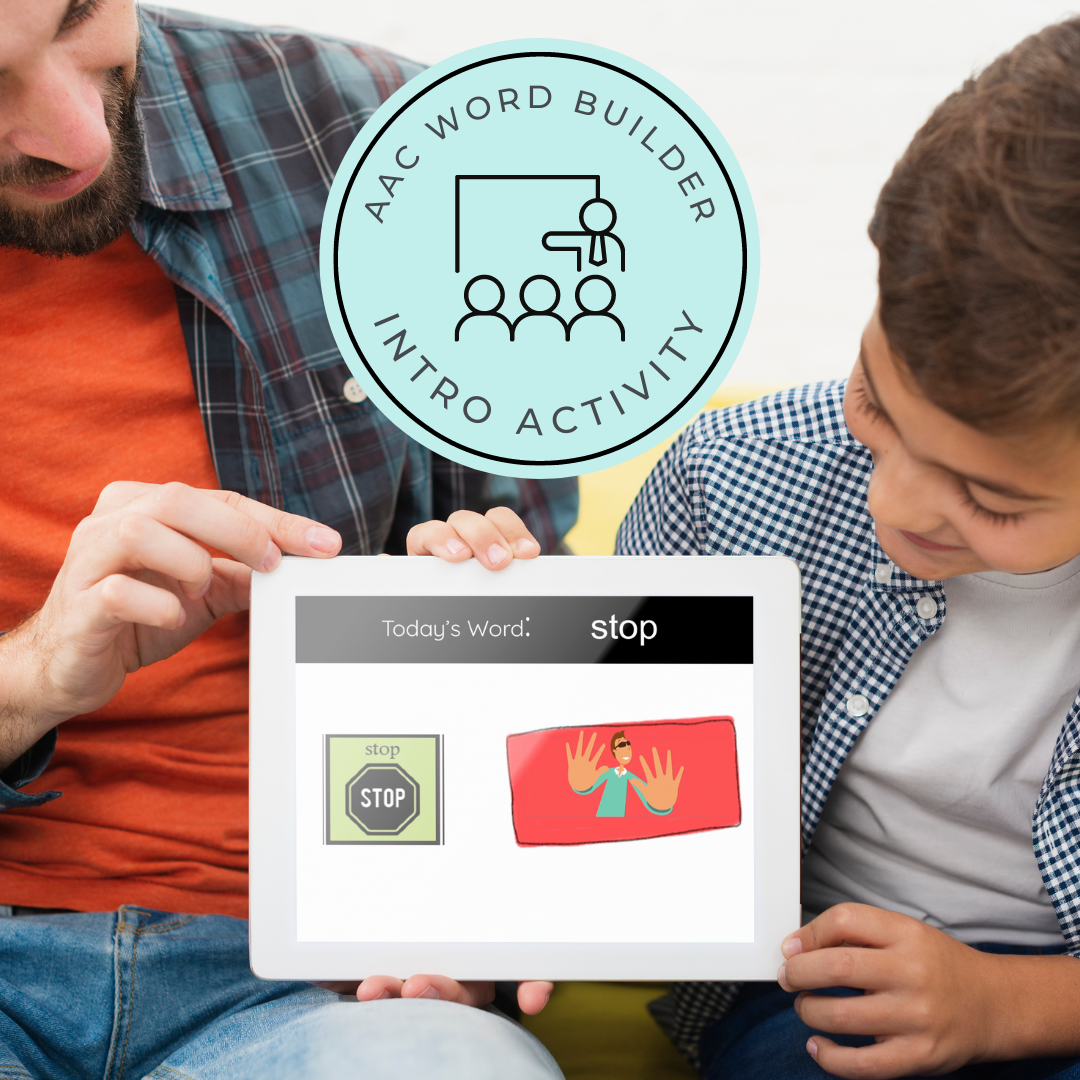
Stop · Get · Look/See · Up · Good · Make · Work · In · Who · Read · Different · Bad · Hear/Listen · Take · Do · Again · Wait · Happy · Sick · Out
Set 3 — Weeks 41–60Completing the year: descriptive language, emotional vocabulary, and forward motion.
All · Little · Where · Big · Silly · Watch · Sad · Some · Down · Dirty · Clean · Feel · Give · Fast · Slow · That · When · Ready · Away · All Gone
Note: In Set 1, three high-utility words (Go, Turn, and Not/Don't) receive two weeks of instruction each because their frequency and functional reach justify the deeper repetition. This is intentional pacing, not padding.
Bundle savings
Set 1 individually: $59.99
Set 2 individually: $59.99
Set 3 individually: $59.99
Complete Bundle: $149 — save $30
Buy the bundle once. Use it across a full school year. Reuse it every year after. The savings start at checkout; the value compounds across every cohort of students you support.
Formats, delivery & purchase orders
💻 Digital download — instant access after purchase
📱 Works on iPad, laptop, Chromebook, or any device with internet access
🎓 Compatible with teletherapy, push-in, pull-out, and home use
Purchase orders accepted. Email service@adapted4specialed.com
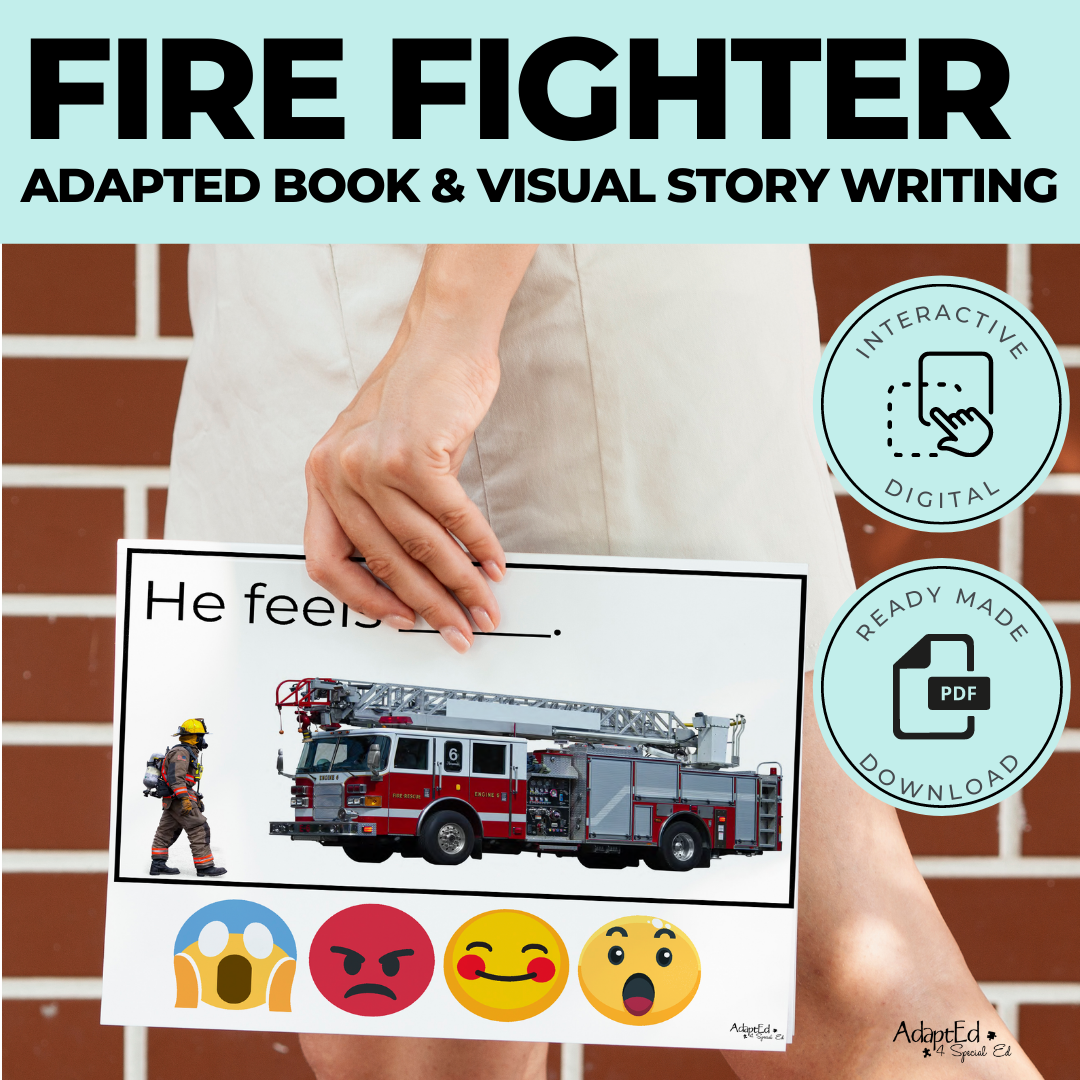
Firefighter Visual Story Writing + Adapted Book (Printable PDF & Interactive Digital)
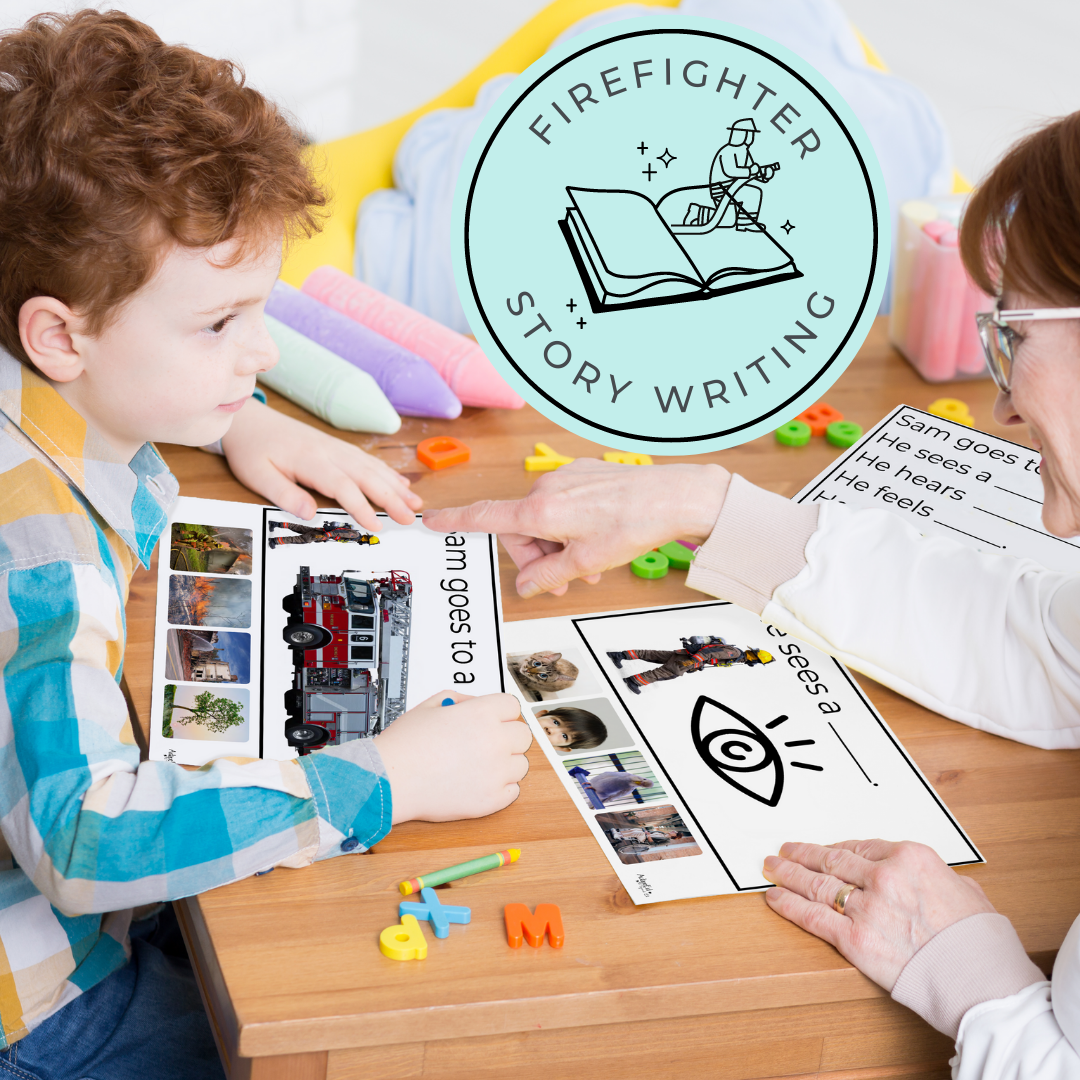
Visual Story Writing with stories about Sam the Firefighter- has your students create their own story by choosing from a variety of visual supports on each page.Student's choose their own story line sequencing, they first build their own story using manipulatives.
Then, use a sequencing template to put their story components in order and practice their narrative technique!Also, works on sentence building and identifying appropriate emotions!Each story consists of five parts for the students to sequence.This sequencing set includes:
5 Sam the Firefighter Stories:
Printable
Drag and Drop Digital Version
Use this set over and over 200 possibilities per story for a total of over 1,000 possibilities for the entire set!
1 A Firefighter can... Adapted Book
Printable
Drag and Drop Digital Version
57 page PDF | 45 Digital Drag and Drop Pages
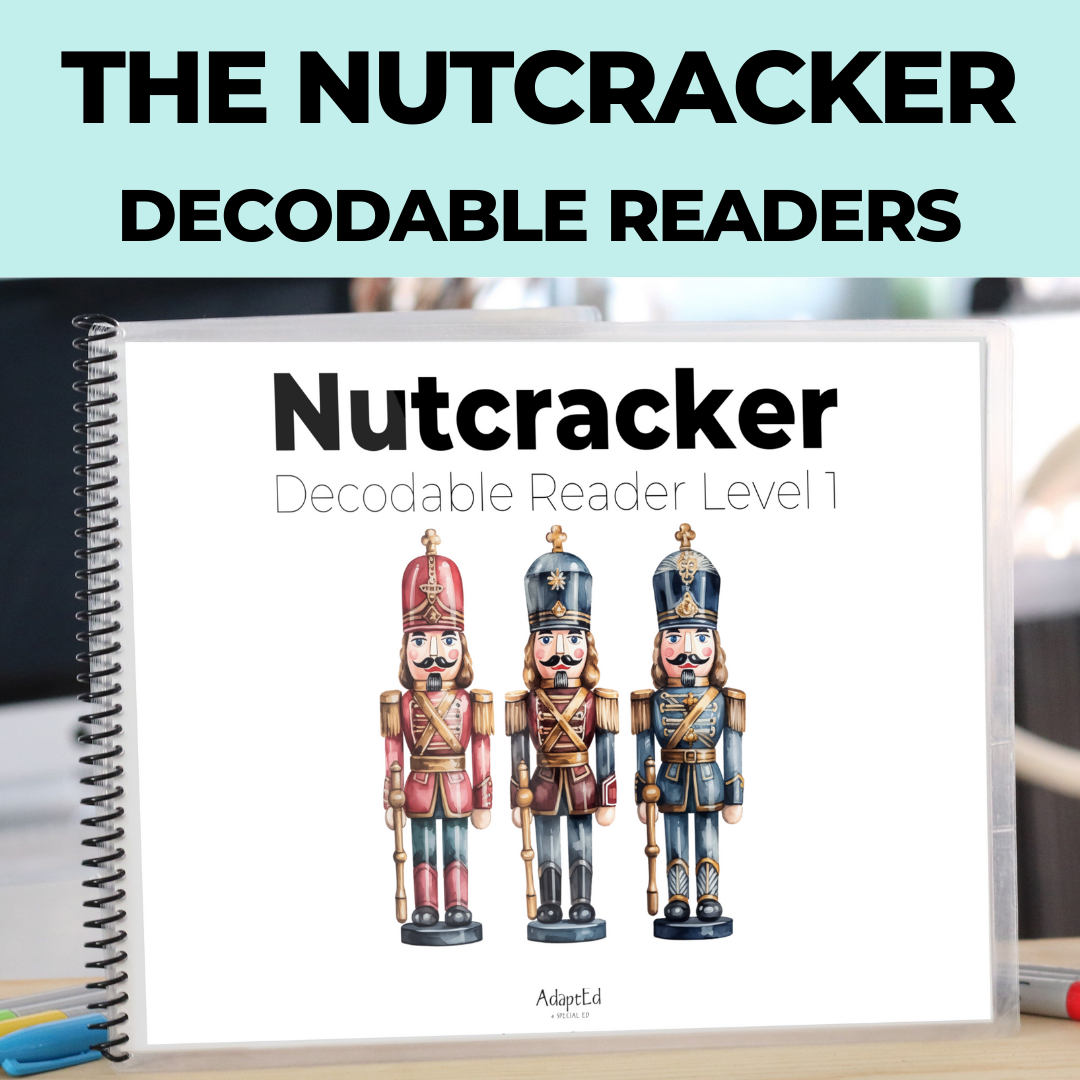
Nutcracker Decodable Readers + Reading Comprehension (Printable PDF)
Introducing our captivating Nutcracker-themed decodable reader set, featuring two leveled readers and visually supported comprehension questions. Unlock the enchanting world of the Nutcracker with these engaging stories that are perfect for young readers!
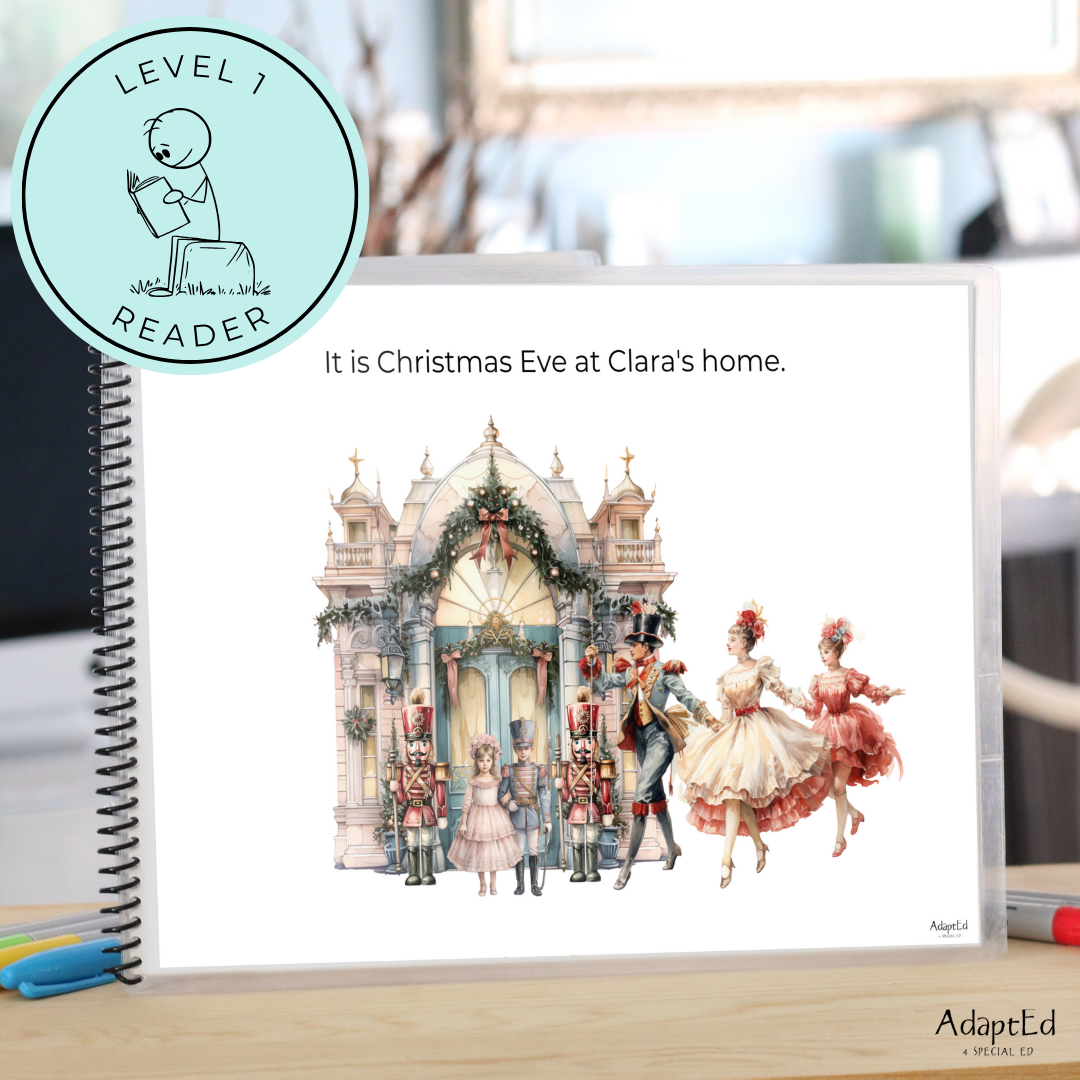
Level 1: (16 pages) - Join Clara and the brave Nutcracker as they embark on an extraordinary journey . This beautifully illustrated reader is designed to captivate young minds, with six comprehension questions throughout the story to reinforce understanding.
Level 2: (14 pages) - Dive deeper into the magical world of the Nutcracker with this leveled reader. This reader includes ten comprehension questions to challenge and engage readers at a higher level.
Both leveled readers feature stunning visuals that bring the Nutcracker story to life, making it easier for students to comprehend and connect with the content. The visually supported comprehension questions ensure that students grasp key concepts and develop their reading comprehension skills.
As a digital download, the PDF will be delivered to your email immediately upon purchase, allowing for convenient access and printing.
Don't miss out on this magical opportunity to inspire young readers with the timeless tale of the Nutcracker! Start their reading adventure today!
Please note: This product does not include the full Nutcracker story but focuses on specific sections adapted for young readers.


The Tower Treasure | AAC Symbol-Supported Accessible Novel for Complex Communicators
AAC-Adapted Chapter Book
The Tower Treasure — Fully Adapted for AAC Users
Give AAC users the experience of a real mystery novel.
This AAC-adapted edition of The Hardy Boys: The Tower Treasure keeps the full mystery plot, rewritten in clear, AAC-friendly language.
Supported text, visuals, and AAC-smart supports make it possible for complex communicators to follow, discuss, and enjoy the story from start to finish.
Created by an AAC specialist SLP, this resource is built for students who need significant language, visual, and communication supports—but still deserve age-respectful chapter books.
17 fully adapted chapters Pre-reading and comprehension questions 3 differentiated journal formats Works with any AAC system
Experience the entire a classic Frank and Joe Hardy mystery, for complex communicators.
Run predictable, chapter-by-chapter lessons with minimal prep.
Match icons to any AAC system so students can respond using the language they know.
Built for real AAC classrooms
What This Resource Makes Possible
Let AAC users engage with a chapter book with age-appropriate story.
Use a consistent routine: pre-reading → story → engagement → journal.
Give students multiple ways to respond: AAC, pointing, partner-assisted scanning, writing, and more.
Facilitate rich comprehension discussions using AAC-friendly WH questions and visuals.
Support mixed-ability groups where everyone can access the same story at their own level.
Build stamina, background knowledge, and narrative understanding over time.
Why This Chapter Book Is Different
Most AAC “books” are short, babyish. Older students quickly recognize that their materials don’t match what their peers are reading—and they disengage.
This resource allows students to experience the fun mystery plot of The Tower Treasure while adapting the language, visuals, and response options for AAC users. Students aren’t focused on the supports—they’re focused on the story.
Everything is designed so that complex communicators can:
Follow the plot from chapter to chapter
Use their AAC system to comment, predict, and answer WH questions
Enjoy an age-respectful story with real stakes and problem-solving
Chapter-by-Chapter Structure
Every chapter follows the same AAC-friendly routine so students know what to expect:
Pre-reading questions and visuals to preview key events and vocabulary
Adapted chapter story with symbol-supported text and AAC modeling prompts
Engagement & comprehension questions offered in both multiple-choice and open-ended formats
Look-Back Learning: incorrect answers redirect students to the exact place in the story they need to revisit—reinforcing how strong readers look back and find evidence in the text
A link to a printable journal activity with 3 differentiated options: cut & paste, fill-in-the-blank with a word bank, and independent writing
Optional sensory items and tangibles suggested for each chapter to bring the story to life
Plan on roughly one chapter per week for a semester-long unit—or adjust the pacing based on your group’s needs.
How It Works in Real Classrooms
Use this resource in whole group, small group, or 1:1 instruction:
Project the Google Slides for shared reading and group discussion.
Pause on text to model responses on students’ AAC systems.
Use the comprehension/engagement questions as exit tickets, informal data, or guided practice.
Extend learning with printable journals in 3 formats to match fine-motor and language needs.
Layer in sensory extensions and tangible items for students who benefit from hands-on input.
You can build a weekly “Hardy Boys day” into your schedule or weave chapters into your existing literacy block.
Works with Any AAC System
This resource includes generic, non-proprietary AAC icons so you can use it as-is right away.If you prefer, the icon placeholders are fully editable, allowing you to swap in icons from the AAC systems your students already use — as long as you have legal access to those symbol sets.
You can match your classroom’s AAC layouts, including systems such as:
LAMP Words for Life
TouchChat
TD Snap
Proloquo
Unity
PODD
CoughDrop
Custom or district-created systems
Customizing the icons ensures questions, answers, and story language mirror the layout students already know, which reduces cognitive load and increases independence.
Age-Respectful Literacy for Grades 3–12
The content is designed for older elementary through high school AAC users:
Mystery, danger, and problem-solving—not “little kid” plots
Characters and situations that feel appropriate for roughly ages 8–18
Supports that protect student dignity while making the text accessible
Mixed-age classrooms and programs can read the same story together while you adjust questions, response formats, and supports for each student.
What You Get
Ready-to-Use Digital Resource
Fully adapted 17-chapter novel of The Tower Treasure, written in AAC-friendly, core-word-rich language.
Google Slides lessons for each chapter, including pre-reading, adapted story, visuals, vocabulary, and comprehension.
Printable student journals with 3 response options per chapter: cut & paste, fill-in-the-blank with word bank, and independent writing.
Look-Back Learning so students are guided back to the story when they miss a question, modeling evidence-based reading.
Editable AAC icons to align visuals with your students’ AAC systems.
Perfect for AAC-focused SLPs, special education teachers, inclusion teams, AT/AAC specialists, paraprofessionals, and families supporting AAC users in grades 3–12.
AAC users shouldn’t be stuck with baby books while their peers move on to real stories.
Hardy Boys: The Tower Treasure — Fully Adapted for AAC Users gives your students the chapter-book experience they’ve always deserved: rich story, clear supports, and true accessibility across all 17 chapters.
